Key Takeaways
- Customer retention tactics convert initial purchases into repeat business and predictable revenue.
- Retention strategies focus on making it easy for customers to engage with your business after their first purchase.
- Implement effective onboarding, timely follow-ups, and personalized communication to enhance customer experiences.
- Regularly seek feedback, reward loyalty, and monitor repeat revenue to inform your retention efforts.
- Automate routine tasks to allow your team to focus on building strong customer relationships.
Introduction
A customer who bought once, had a decent experience, and then never heard from you again is not a lost cause. They are usually a follow-up problem. For small businesses, strong customer retention tactics turn the money already spent on lead generation into repeat purchases, referrals, and more predictable monthly revenue.
Keeping customers is not about sending more discounts or adding another complicated software subscription. It is about making it easier to get value from your business, easier to get help, and easier to choose you the next time they need what you offer.
Why retention deserves as much attention as lead generation
New leads matter, but they are often the expensive part of growth. You pay with ad spend, networking time, content creation, or sales effort before a prospect becomes a customer. Retention helps that investment produce more than one transaction.
For a local service business, that might mean turning a one-time repair into a maintenance customer. For a consultant, it could mean moving a completed project into an ongoing advisory relationship. For an agency, it may mean preventing a good client from quietly drifting away after the initial campaign ends.
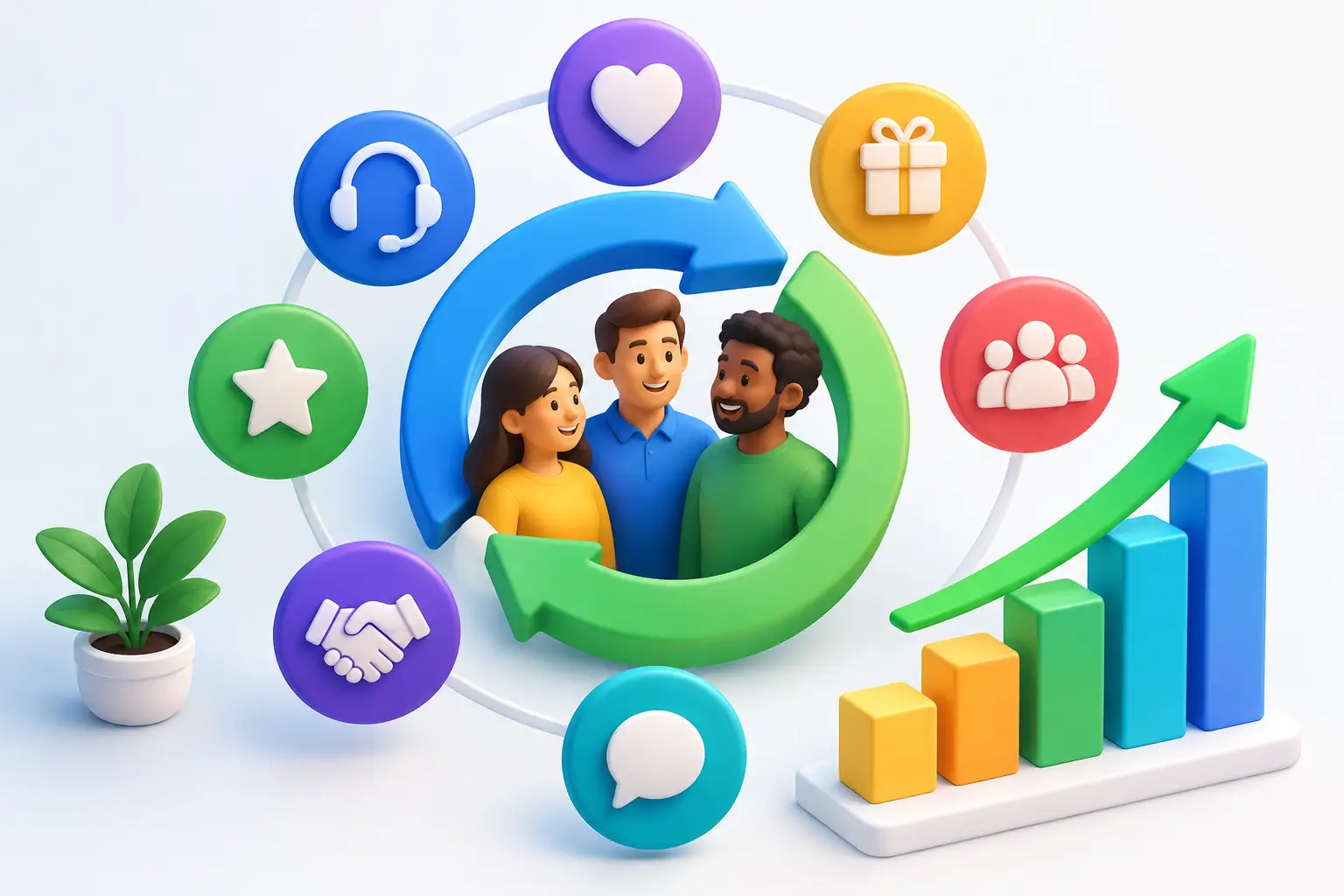
The right retention plan depends on your sales cycle and what customers buy. A home service company should not communicate like a high-ticket coach, and a real estate professional should not use the same timing as a monthly membership business. The principles below work across industries because they focus on the moments that shape whether customers return. Retention is the engine of flywheel marketing, where happy customers fuel growth.
10 customer retention tactics that work for small businesses
1. Make the first 30 days feel intentional
The period immediately after a sale is where expectations either become trust or turn into buyer’s remorse. Do not assume customers know what happens next. Send a clear welcome message, confirm the next step, explain how to get support, and give them one simple action to take.
For example, a marketing consultant might send a kickoff checklist and booking link. A landscaper might explain the service schedule and what the homeowner should expect on the first visit. Clear onboarding reduces confusion, support requests, and early cancellations.
2. Follow up before the customer has to chase you
Silence feels like neglect, especially after someone has paid. Build follow-up around natural milestones: after delivery, after an appointment, midway through a service period, and before a reorder or renewal window.
This does not require a personal message every time. Automated email or text reminders can handle routine communication while keeping the message timely. The key is relevance. A generic “just checking in” message is weaker than a note that asks whether the customer achieved the result they hired you for.
3. Track customer history in one place
When customer conversations live across personal inboxes, text threads, spreadsheets, and separate apps, service becomes inconsistent. A customer should not have to repeat their situation every time they contact your business.
Keep notes on purchases, open opportunities, preferences, past issues, and promised follow-ups in a shared customer record. That context helps a small team respond like a much larger, organized company. It also makes it easier to spot customers who have gone quiet before they disappear completely.
Want to know how you could improve your business?
Our team is available for a free consultation.
4. Solve problems quickly and visibly
Mistakes happen. Delayed responses and vague answers cause more damage than the original problem. Give customers a direct way to ask for help, acknowledge the issue quickly, and explain the next step instead of making them guess.
Speed matters, but ownership matters more. If you need time to investigate, say so and set a specific time for your next update. Customers are often willing to stay when they feel heard and see real progress. They leave when they feel ignored.
5. Personalize based on behavior, not guesswork
Personalization does not mean adding a first name to every email. It means using what you know to make communication useful. Recommend the next service based on what they bought, send reminders based on timing, and tailor offers to their actual needs.
A cleaning company can remind recurring customers when it is time to schedule. A coach can invite past clients to a relevant workshop. A real estate agent can send homeowners market updates that match their neighborhood and timeline. Useful messages build trust. Constant promotions train people to wait for discounts.
6. Create a simple reason to return
Many customers do not leave because they are unhappy. They simply forget, delay, or choose the easiest available option. Give them a clear next purchase path before their current transaction fades from memory.
That could be a maintenance plan, a refill reminder, a follow-up session, a seasonal service, or a package that rewards repeat business. The offer should fit the buying cycle. Asking a customer to purchase again too soon feels pushy, while waiting too long lets the relationship go cold.
7. Ask for feedback while you can still act on it
Do not wait for a negative public review to learn that an experience went wrong. After a key interaction, ask a short question: “How did we do?” or “Was there anything that would have made this easier?”
Keep the request easy to answer. Then respond to what you learn. If several customers mention confusing scheduling or slow updates, that is not merely feedback. It is a revenue signal. Fixing recurring friction often improves retention more than launching a new promotion.
8. Reward loyalty without racing to the bottom on price
Discounts have a place, but they should not be your only retention strategy. If every return customer gets a lower price, you may protect repeat purchases while shrinking your margins.
Consider benefits that feel valuable but cost less than a blanket discount: priority scheduling, early access, a complimentary check-in, member-only education, or a referral credit. The best loyalty benefit reinforces why customers chose you in the first place. A premium service business, for instance, may gain more from priority access than from a coupon.
9. Reach out when engagement drops
A missed appointment, an unopened sequence of messages, or a skipped renewal can signal a customer at risk. Create a simple re-engagement process rather than relying on memory.
Start with a helpful message that acknowledges the gap and offers a useful next step. For example: “It has been six months since your last service. Would you like us to reserve a spot before the busy season?” If there is no response, a second message can include an incentive, but lead with service and relevance rather than urgency alone.
10. Measure repeat revenue, not just new sales
What gets measured gets managed. Review how many customers buy again, how long they stay active, how many cancel or go inactive, and which services lead to the most repeat business.
You do not need a complicated dashboard to start. Even a monthly review of repeat bookings, renewals, referrals, and inactive customers can reveal where revenue is leaking. Then test one improvement at a time. Better onboarding, faster follow-up, or easier booking can each create a measurable lift.
Build a retention system your team will actually use
Retention breaks down when it depends on someone remembering every follow-up. The goal is not to automate every relationship. It is to automate the routine work so your team can spend their attention where it matters most.
A practical system connects customer details, appointments, messages, payment status, and follow-up tasks. That way, a completed job can trigger a satisfaction check, a future reminder, and a prompt for a review or referral without anyone rebuilding the process in multiple tools. TwiLead helps small businesses bring those customer touchpoints into one place, reducing the gaps that cause good customers to slip away.
Start small. Choose one point in the customer journey where people commonly go silent, then create one timely message and one clear next action. Once that works, add the next step. Retention improves through consistent experiences, not through a complicated plan no one has time to maintain.
The customer who returns is telling you something valuable: your business delivered enough value to earn another chance. Make that second purchase easy, and you give your business a stronger foundation for every new lead you generate.