B2B lead generation is one of the biggest challenges for growing businesses today.
With longer sales cycles, multiple decision‑makers, and increasingly informed buyers, attracting the right leads is no longer about volume, it’s about relevance and timing.
In this article, we’ll break down what B2B lead generation really means, why it matters, and how you can build a more effective strategy to consistently attract, nurture, and convert high‑quality business leads.
What is a B2B Lead?
A B2B lead is a business or professional who has shown genuine interest in your product or service and has the potential to become a customer.
These leads are usually driven by real business challenges -like saving time, increasing revenue, or improving internal processes- and often involve more than one decision‑maker.
For small businesses, successful B2B lead generation isn’t about chasing every opportunity, but about identifying the right companies you can truly help and guiding them step by step from first interest to long‑term partnership.
Key Characteristics of B2B Leads:
- Interest: B2B leads have expressed interest in your products or services through various actions, such as visiting your website, downloading content, or filling out a contact form.
- Qualification: Leads are often categorized based on their likelihood to convert into customers. This includes Marketing Qualified Leads (MQLs) and Sales Qualified Leads (SQLs).
- Engagement: B2B leads engage with your brand through multiple touchpoints, such as email, social media, and events[1].
Why Is B2B Lead Generation Important?
B2B lead generation is essential for small businesses because it helps to achieve:
- Revenue Generation: Leads are the lifeblood of any B2B business, as they represent potential revenue opportunities. Without a steady flow of qualified leads, it becomes difficult to build a predictable sales pipeline or sustain consistent revenue over time.[2].
- Business Growth: Understanding your leads allows for more targeted and effective marketing campaigns. By consistently attracting the right prospects, small businesses can scale more confidently and reduce their dependence on one‑off opportunities [3].
- Targeted Marketing: By focusing on qualified leads, sales teams can prioritize their efforts and close deals more efficiently. When you know who your leads are and what they need, you can deliver more relevant messages that resonate and drive higher engagement. [4].
- Sales Efficiency: By focusing on qualified leads, sales teams can prioritize their efforts and close deals more efficiently[5].
Get more B2B leads
Build your own AI‑Powered automation system and attract and convert more leads with ease.
The B2B Lead Generation Process
The B2B lead generation process is the structured path you have to follow to attract, engage, and convert potential business clients into qualified leads.
Unlike B2C, where decisions are often fast and emotion‑driven, B2B buying journeys are longer, research‑heavy, and involve multiple stakeholders.
Understanding this process is key to building predictable, scalable growth.
1. Define Your Ideal Customer Profile (ICP):
The lead generation process starts by clearly defining your Ideal Customer Profile (ICP).
This step helps you understand exactly who you want to target, what problems they face, and how your solution fits into their workflow.
A well‑defined ICP ensures that your marketing and sales efforts focus on high‑value prospects who are more likely to convert, reducing wasted resources and improving your overall acquisition efficiency.

In this step, you need to clearly define the characteristics of your ideal customers, such as industry, company size, job title, and pain points.
This helps you target the right audience and attract high-quality leads.
2. Choose the Strategies and Channels
Once your ICP is established, the next step is to select the right strategies and channels to reach them.
To know what channels are the best fit, you need to answer a key question: In what platforms is my ICP?
This includes choosing the mix of inbound and outbound tactics, such as content marketing, SEO, email outreach, paid ads, or social selling—that best align with your buyer’s behavior.
The goal is to meet your audience where they already are and deliver messages that resonate with their needs and intent level.
3. Qualify
After capturing interest, you need to determine which prospects are truly a good fit.
Qualification involves assessing factors like budget, authority, need, and readiness to purchase.
Ensuring your sales team focuses on the prospects with the highest likelihood of closing.
Strong qualification improves conversion rates and shorten the sales cycle.
4. Nurture
Not every lead is ready to buy immediately, especially in B2B.
Lead nurturing uses targeted content, automated workflows, and personalized communication to guide prospects through their decision-making journey.
By nurturing leads with relevant information at the right time, you build trust, address objections, and keep your solution top-of-mind until they are ready to move forward.
5. Convert
The final step is conversion, where a nurtured and qualified lead becomes a paying customer.
This stage involves clear calls to action, product demonstrations, tailored proposals, and frictionless onboarding experiences.
Strong conversion processes focus on reducing barriers, reinforcing value, and giving prospects the confidence to take the next step.
When done right, conversion feels natural because it is the logical outcome of a well‑executed lead generation journey.
Automate Lead Conversion
Build your own AI‑Powered automation system and attract and convert more leads with ease.
Techniques to Generate B2B Leads 2026 Update
Generating B2B leads isn’t about using just one tactic, it’s about combining the right strategies to attract and connect with the right people.
Let’s take a look at some effective ways to generate B2B leads.
Content Marketing
Is one of the most powerful foundations of B2B lead generation.
Content marketing is a strategic approach focused on creating and distributing valuable, relevant, and consistent content to attract and engage a clearly defined audience.
Instead of pushing a direct sales message, content marketing aims to educate, inform, or solve problems for your ideal clients, so they naturally trust your brand and move toward becoming leads.
In B2B, content marketing is especially powerful because buyers often conduct extensive research before contacting a vendor.
High‑quality content positions your business as an expert and guides prospects throughout their decision‑making process.
By creating valuable and relevant content, you attract the right audience, build trust over time, and turn visibility into real business opportunities, without relying solely on paid channels.
Common B2B Content Marketing Formats
- Blog articles
- Guides & ebooks
- Templates & checklists
- Webinars
- Case studies
- Industry reports
- How‑to tutorials
- Newsletter insights
- Videos
- Comparison pages
Social Media Marketing (especially LinkedIn)
Social media marketing allows you to connect with potential leads where conversations are already happening.
By sharing insights, thought leadership, and product benefits on platforms where B2B buyers actively research and network, you can build relationships, increase brand visibility, and support your B2B lead generation efforts in a more human and approachable way.
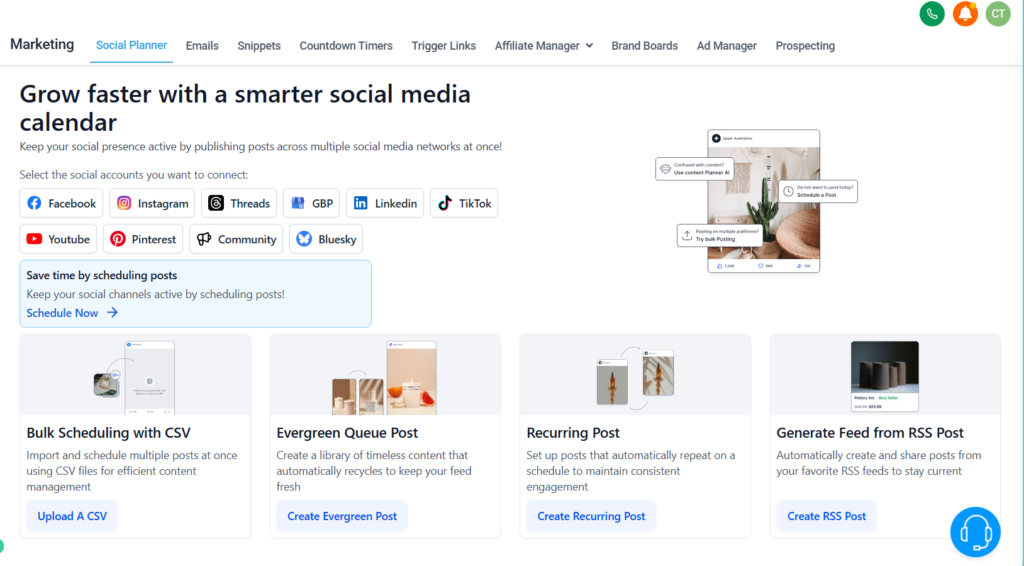
LinkedIn is the strongest channel for B2B lead generation because it concentrates decision‑makers, intent‑driven buyers, and industry conversations in one place, making it easier to reach the right audience with high relevance.
Email Marketing
Email marketing remains one of the most effective channels for nurturing B2B leads.
With the right strategy, it allows you to stay in touch with prospects, deliver personalized messages, and guide them step by step from initial interest to conversion.
Using newsletters, nurturing workflows, and targeted campaigns to engage leads over time, deliver personalized value, and move them toward conversion.
Get more B2B leads
Automate your Email Marketing efforts using TwiLead
Paid Advertising
Paid advertising is one of the fastest and most scalable ways to generate B2B leads because it allows you to target decision‑makers with high precision and reach them at the exact moment they show buying intent.
Platforms like Google Ads, LinkedIn Ads, and industry‑specific networks offer advanced targeting options based on job title, industry, company size, keywords, and even real‑time intent signals.
This ensures your message is shown only to ICP‑fit prospects who are actively researching solutions like yours.
By pairing strong landing pages with compelling offers (like demos, free trials, or lead magnets), paid advertising can quickly fill your pipeline with qualified prospects and support both short‑term and long‑term demand generation goals.
Search Engine Optimization (SEO)
SEO remains one of the most powerful long‑term B2B lead generation techniques because it helps your business capture high‑intent prospects at the exact moment they are searching for solutions like yours.
Unlike outbound tactics that interrupt the buyer, SEO attracts visitors who already have a defined need, making them far more likely to convert.
With a solid SEO strategy, your website and content can rank for relevant keywords, appear in AI‑generated answer environments, and build ongoing organic traffic that compounds over time.
A strong SEO strategy not only increases visibility but also builds trust and brand authority, two factors that heavily influence B2B buying decisions.
When executed consistently, SEO becomes a predictable and cost‑efficient source of qualified leads, and a cornerstone of sustainable growth.
Networking and Events
Networking and events create opportunities for real human connections.
Whether online or in person, these interactions help build trust, start meaningful conversations, and generate high‑quality B2B leads through relationships rather than cold outreach.
In 2026, networking goes far beyond traditional trade shows. Today’s most effective formats include:
- Large industry conferences and exhibitions
- Smaller niche or vertical‑specific events
- Webinars and virtual summits
- Hands‑on workshops, meetups, and roundtables
- Community‑driven events inside Slack, Discord, or LinkedIn groups
Chatbots & On‑Site Conversion Tools
Chatbots and on‑site conversion tools have become essential for B2B lead generation because they capture and qualify leads the moment they land on your website, before they bounce or lose interest.
Instead of relying solely on static forms, chatbots offer real‑time interaction, guide visitors to the right resources, answer questions instantly, and help identify buying intent based on behavior.
In 2026, these tools are especially powerful thanks to AI‑driven automation. Modern chatbots can:
- engage visitors within seconds,
- ask qualifying questions,
- route high‑intent leads directly to sales,
- personalize recommendations based on user behavior, and
- integrate with your CRM for automated follow‑up sequences.
This reduces friction, accelerates response times, and ensures no valuable prospect goes unnoticed, something that is increasingly critical as buyers move faster and expect immediate answers.
Not as complicated as it looks
Many businesses assume that adding a chatbot to their website requires technical skills or custom development. But with tools like Twilead, creating and deploying a chatbot takes just a few minutes.
You can build custom conversation flows, qualify leads automatically, and embed the chatbot on your site with a simple copy‑and‑paste script.
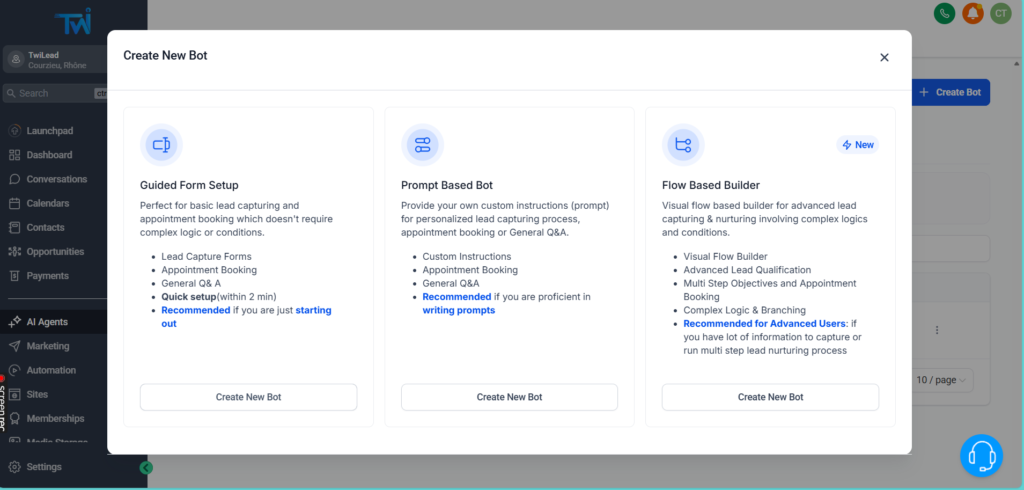
Twilead also provides an intuitive editor, templates, and integrations, making it extremely accessible for small businesses that want to improve on‑site conversion without extra complexity.
We even created a step‑by‑step tutorial showing exactly how to do it.
Get more B2B leads
Create your own Chatbot today and start getting highly qualified leads
Best B2B Lead Generation Practices for 2026
By focusing on the right strategies from the start, small businesses can attract better leads, avoid wasted effort, and turn interest into real opportunities.
In 2026, B2B lead generation is defined by AI‑driven intelligence, intent‑based targeting, real‑time engagement, and precision over volume.
Let’s explore the best practices that help make B2B lead generation more consistent and sustainable!
1. Focus on Lead Quality Over Volume
High-performing B2B teams in 2026 know that more leads don’t equal more revenue.
Instead, the modern approach is to prioritize ICP‑fit leads that show real buying intent, the ones who demonstrate meaningful engagement signals.
Rather than filling your CRM with low‑value contacts, focus on identifying the smaller subset of prospects who actually match your target market and are actively researching solutions.
These leads convert faster, cost less to nurture, and generate far more predictable revenue.
Why it works
Prioritizing quality dramatically increases conversion rates because your sales team spends time only on buyers who are ready—or nearly ready—to move forward.
You reduce noise, eliminate wasted follow-ups, and streamline your entire customer acquisition system. Better targeting leads to better conversations, shorter cycles, and a stronger pipeline.
2. Automate Lead Capture and Routing With Smart Forms
Static, one‑size‑fits‑all forms slow everything down. Smart businesses now use dynamic, logic‑based forms that adapt to each visitor in real time, collecting only the data that matters, enriching it automatically, and routing leads instantly based on fit, territory, or buying intent.
Why it works
Intelligent capture + instant routing = faster qualification, faster responses, and a pipeline driven by truly ICP‑fit leads. When your speed‑to‑lead increases, so do your conversion rates and overall pipeline velocity.
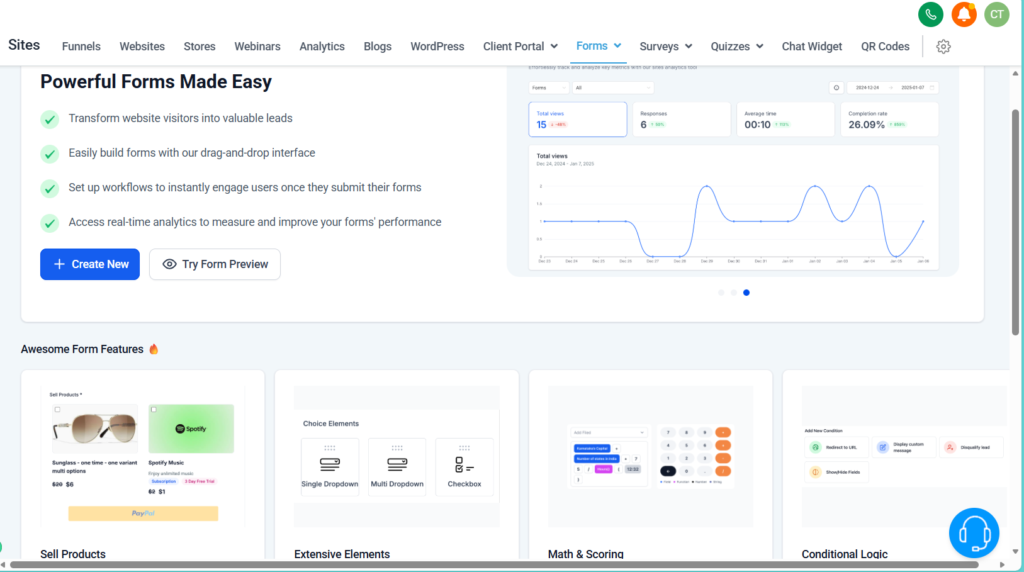
Twilead makes this process effortless. You can build no‑code smart forms in minutes and connect them directly to automated workflows that qualify, enrich, score, and route leads without any engineering work.
More automation. Less friction. Better leads.
3. Use Calendar Links to Remove Scheduling Friction
The back‑and‑forth of trying to schedule a meeting kills momentum, especially when a prospect’s intent is at its peak.
Adding specific calendar links to outbound emails, chatbot conversations, and high‑intent pages (like pricing or demo requests) lets prospects book instantly, right when they’re most engaged.
Why it works
Eliminating scheduling delays boosts speed‑to‑meeting, keeps deals moving, and ensures you catch buyers while their interest is strongest.
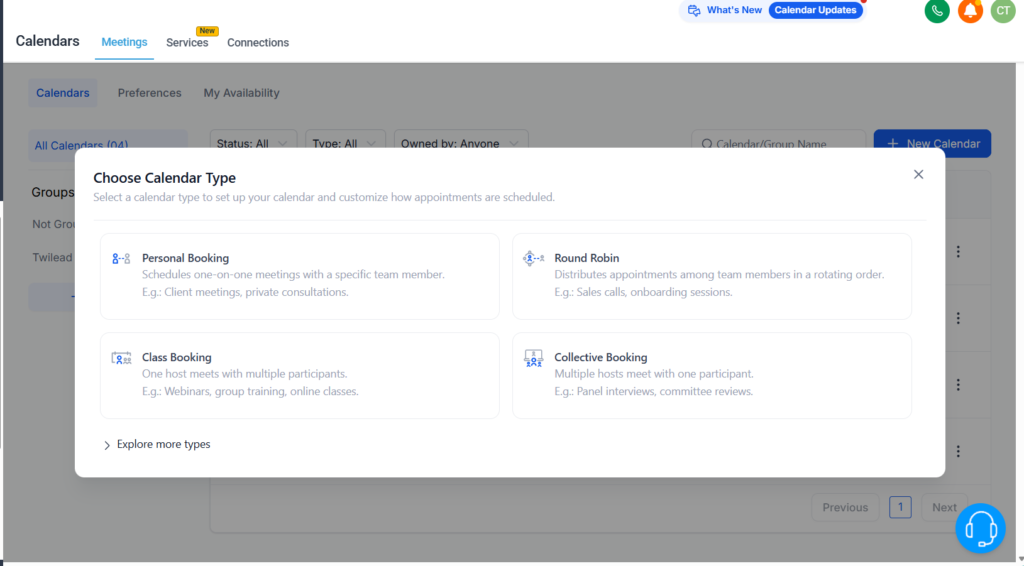
With Twilead, scheduling becomes effortless.
Our built‑in booking engine automatically routes leads to the right sales rep based on availability and meeting type, so prospects book in one click, and your team never has to manually coordinate calendars again.
4. Make AI the Core of Your Lead Generation Engine
AI has moved from being a “nice‑to‑have” to becoming the central operating system of modern B2B lead generation.
Companies embracing AI‑driven lead generation are seeing dramatic improvements, including 50% more sales‑ready leads and 62% faster conversions.
AI now powers every critical stage of the funnel, targeting, enrichment, scoring, routing, personalization, and even timing.
The result is a smarter, faster, and more predictable acquisition system that adjusts to buyer behavior in real time.
Get more B2B leads
Create your own AI.powered Lead Generation Engine and start getting highly qualified leads
Why it works
AI removes friction across the entire buyer journey. It automates the repetitive tasks that slow teams down, amplifies what works, and ensures every prospect receives the most relevant message at the right time.
This leads to better targeting, cleaner data, quicker handoffs, and a pipeline built on real intent, not assumptions.
With Twilead, AI‑powered lead generation is built into your CRM from day one.
You get automated enrichment, adaptive scoring, smart routing, and behavior‑based triggers, so your system works for you 24/7 while your team focuses on converting the highest‑value opportunities.
5. Use a CRM to Build a Structured Lead Qualification System
A CRM isn’t just a place to store contacts, it’s the foundation of a predictable, scalable lead generation and qualification system.
When used correctly, your CRM becomes the engine that unifies data, tracks buyer intent, scores leads automatically, and triggers the right workflows at the right moment.
This turns scattered touchpoints into a cohesive journey that attracts, qualifies, and converts leads with far less manual effort.
By centralizing all interactions (emails, forms, calls, website activity), a modern CRM gives you visibility into who your best prospects are, what they’re engaging with, and how close they are to taking action.
Why it works
A CRM creates structure. It eliminates guesswork. And it ensures every lead moves through a consistent process—captured, enriched, scored, nurtured, and routed—without relying on manual tracking.
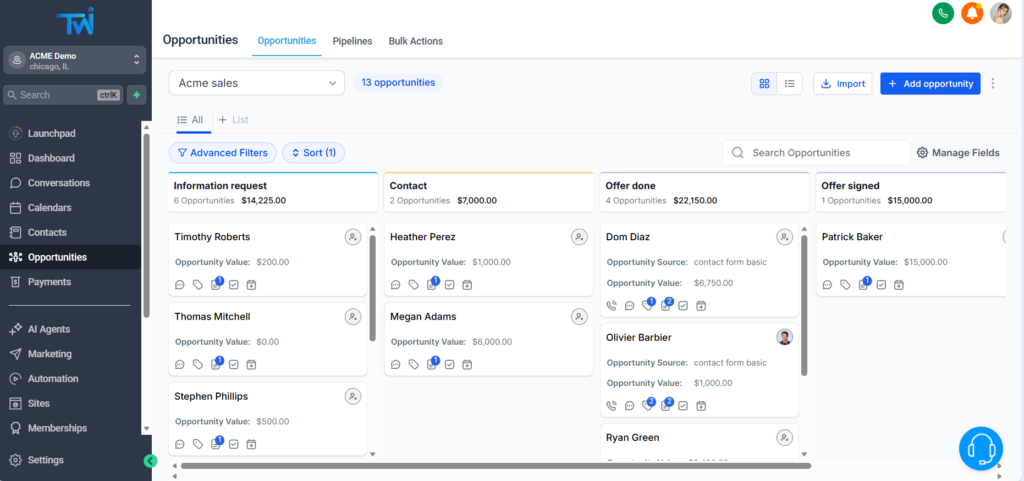
With Twilead, you can build this system effortlessly. Our all‑in‑one CRM lets you:
- centralize every touchpoint in one dashboard,
- automatically qualify leads using scoring and intent signals,
- trigger nurturing sequences based on behavior,
- enrich profiles instantly, and
- route opportunities to the right sales rep without lifting a finger.
When your CRM becomes the core of your lead generation engine, you attract better leads, qualify them faster, and convert them with more predictability—no complex setup required.
How Twilead Boost your B2B Lead Generation Efforts?
Generating B2B leads can feel overwhelming for small businesses, especially when time, budget, and resources are limited. That’s where Twilead comes in.
Instead of juggling multiple tools and platforms, Twilead brings everything together in one simple, powerful solution designed to help you attract, manage, and convert B2B leads more effectively.:
With Twilead, you can:
- Centralize your B2B lead generation efforts: Manage lead capture, nurturing, and follow‑ups from a single platform.
- Attract the right prospects with AI‑powered features: Use AI to improve prospecting, identify high‑potential leads, and focus your efforts on opportunities that truly matter.
- Capture leads across multiple touchpoints: Collect leads through websites, landing pages, forms, funnels, and surveys, all fully connected to your CRM.
- Nurture leads automatically and at scale: Build email automation workflows that keep you in touch with prospects and guide them through the sales journey.
- Understand your leads’ behavior: Track interactions and engagement to gain clearer insights into what your prospects care about and when to reach out.
Conclusion
Generating high-quality B2B leads is essential for business growth and success. By understanding what a B2B lead is, implementing effective lead generation techniques, and following best practices, businesses can enhance their marketing efforts and drive revenue growth.
Get more B2B leads
One AI-Powered Platform for All Your Marketing, Sales, and Automation Needs
References
[1] B2B Lead Generation Marketing: Definition, Strategies, and … – Thomasnet
[2] What Is B2B Lead Generation? The Complete Beginner’s Guide – WebFX
[3] What is B2B lead generation? 15 proven strategies for growth – Zendesk
[4] Generate More Qualified B2B Leads: Strategies, Tips and Tools – Gartner
[5] 10 Best Strategies for B2B Sales Lead Generation – SalesHandy
[6] B2B lead generation: 15 modern strategies for growth and conversion