Key Takeaways
- Sales pipeline management software replaces sticky notes, spreadsheets and inboxes with one clear view of your deals.
- Small businesses need more than a visual deal board.
- Evaluate software by your sales motion, how much manual work it removes and hidden stack costs.
- Prioritise the features that matter, avoid common mistakes and consider the case for consolidation.
Introduction
If your sales process lives across sticky notes, spreadsheets, inboxes, and whatever app you signed up for last month, you do not have a pipeline. You have a cleanup project. Sales pipeline management software fixes that by giving you one place to track leads, follow up faster, and see what is actually moving toward a sale.
For small businesses, that matters more than most software vendors admit. You are not managing a giant enterprise sales team with layers of admins and consultants. You are trying to answer leads, book calls, send proposals, keep marketing moving, and still run the business. The right system should make that easier. If it adds more tabs, more fees, and more setup work, it is solving the wrong problem.
What sales pipeline management software should actually do
A lot of platforms promise better visibility. That sounds nice, but visibility alone does not close deals. Good sales pipeline management software should help you capture leads, sort them into clear stages, automate the next step, and show you where revenue is getting stuck.
At minimum, you should be able to see every opportunity in one dashboard, move deals through stages, assign follow-ups, and keep all communication attached to the contact record. If someone fills out a form, replies to an email, books an appointment, or asks for a quote, your system should log it without forcing you to copy and paste data between tools.
That last part is where many small businesses get burned. They buy one tool for CRM, another for email marketing, another for scheduling, another for automation, and then wonder why the pipeline feels messy. The issue is not discipline. It is fragmentation.
Why small businesses need more than a visual deal board
A basic pipeline board can look impressive in a demo. Drag a card from New Lead to Qualified to Proposal Sent and it feels organized. But if the system stops there, you are still doing the heavy lifting manually.
Real pipeline management starts before a deal enters the board and continues after it is marked won. Leads need to come in from forms, ads, social messages, calls, and landing pages. Follow-ups need to go out automatically when someone goes quiet. Appointments need to connect to the contact record. Estimates, invoices, and contracts should not live in a separate universe.
This is why all-in-one platforms have become more attractive to smaller teams. When sales, marketing, communication, and workflow automation sit in one system, your pipeline becomes more than a chart. It becomes the operating system for growth.
How to evaluate sales pipeline management software
The best choice depends on how you sell. A consultant booking discovery calls has different needs than a training center managing multiple enrollments. A local service business may care more about appointment scheduling and text follow-up than complex forecasting. Still, the evaluation criteria are surprisingly consistent. Before comparing tools, define the sales workflow you want the software to run.
Start with your sales motion
If your pipeline is short and straightforward, you need speed and simplicity. Too many fields, permissions, and setup options will slow your team down. If your sales cycle is longer, with multiple touchpoints and proposals, then automation and activity tracking become more important.
Look at how leads enter your business, how many stages you really need, and what usually causes deals to stall. That tells you more than any feature grid.
Check how much manual work it removes
This is where the real ROI shows up. Good software should automatically assign leads, trigger reminders, send follow-up messages, and update records based on actions customers take. If your team still has to babysit every lead, the platform is acting like a database, not a growth tool.
For small businesses, every manual task has a cost. It is not just time. It is missed follow-up, inconsistent communication, and deals that disappear because no one had a clean system.
Watch for hidden stack costs
Many sales tools look affordable until you need the features that make them useful. Then the price climbs because automation is in one tier, reporting is in another, more users cost extra, and integrations require third-party tools.
That pricing model hits small businesses the hardest. You start with one subscription, then add email marketing, scheduling, social media, forms, invoicing, and workflow automation until your monthly software bill looks like payroll. Sales pipeline management software should reduce that chaos, not become another line item in it.
Want to know how you could improve your business?
Our team is available for a free consultation.
Features that matter most
Not every feature deserves equal weight. Small businesses usually get the most value from a short list of capabilities that directly affect speed, consistency, and close rate.
Pipeline customization matters because your business should not have to twist itself around a generic sales process. You need stages that match how you actually sell.
Lead capture matters because a pipeline is only as good as the flow entering it. Forms, landing pages, chat, and social inquiries should feed the same system.
Automation matters because follow-up is where revenue is won or lost. Simple actions like sending a reminder, assigning a task, or moving a lead to the next stage should not depend on memory.
Communication tracking matters because no owner wants to search through inboxes, texts, and DMs just to remember the last conversation.
Reporting matters, but only if it is useful. Fancy dashboards are not the goal. You need fast answers to practical questions: Which sources bring qualified leads? Where do deals stall? Which rep follows up fastest? What stage produces the most drop-off?
Common mistakes when choosing pipeline software
The biggest mistake is buying for future complexity instead of current reality. A lot of small businesses get sold on enterprise-style systems packed with features they will not use for a year, if ever. The result is a tool that feels heavy from day one.
Another mistake is choosing based on the pipeline board alone. That visual experience matters, but it is only one piece. If the software cannot handle marketing, scheduling, follow-up, and customer communication in a connected way, you will still need extra tools to make it work.
The third mistake is underestimating onboarding friction. If your team needs weeks of setup, multiple integrations, and a consultant just to launch, momentum dies fast. Small businesses need software that can be put to work quickly.
The case for consolidation
There is a reason more small business owners are moving away from stitched-together software stacks. The old model creates too many handoffs. Leads come in through one app, get emailed through another, booked through another, invoiced through another, and reported on through a spreadsheet. Every handoff adds delay and risk.
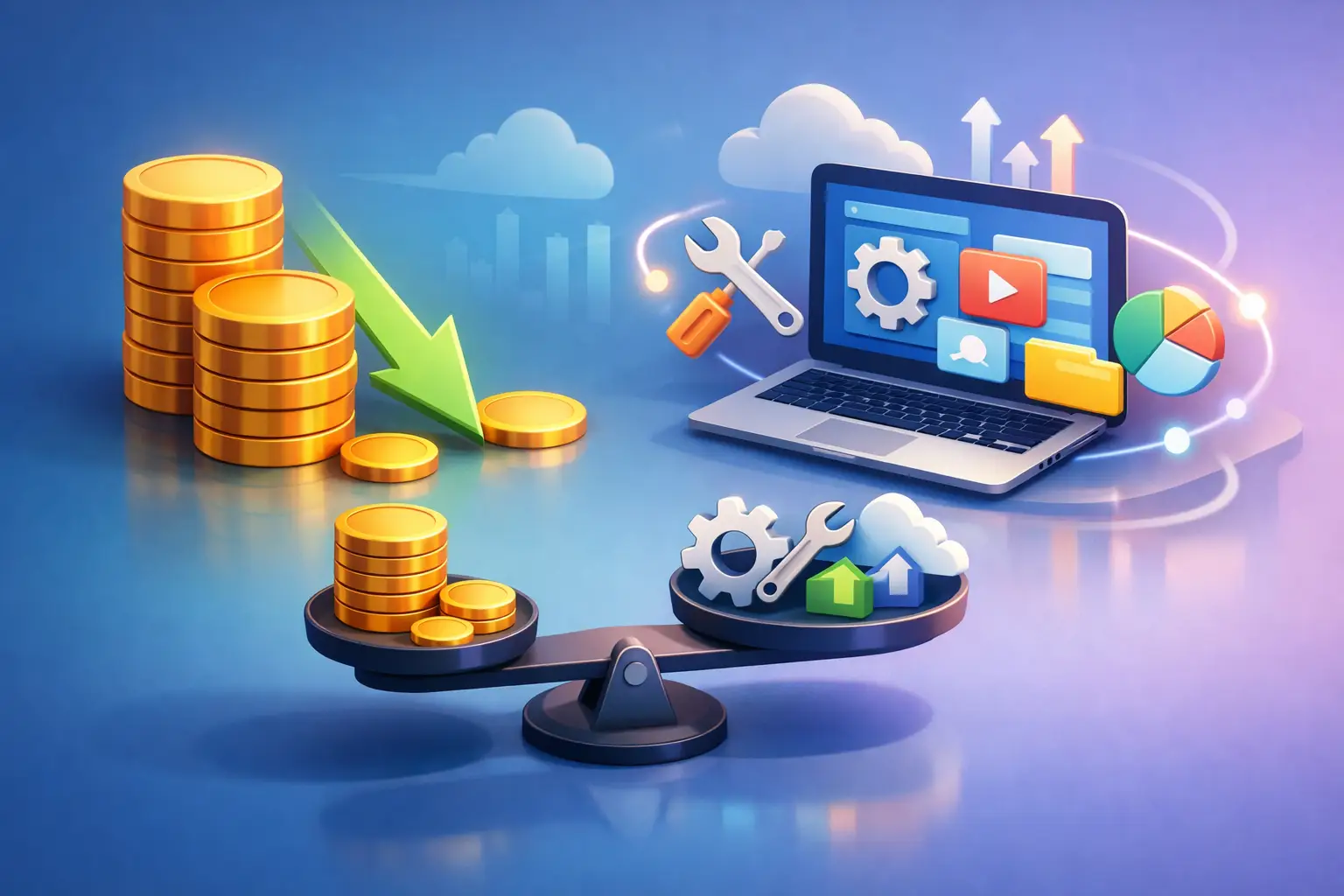
Consolidation changes the math. When your CRM, pipeline, email marketing, automation, appointment booking, and customer conversations live together, you save money and reduce operational drag at the same time. That is not just cleaner. It directly improves lead response time and sales consistency.
This is where a platform like TwiLead makes a strong case for small businesses that are tired of paying for five to ten separate tools. Instead of managing software sprawl, you get one system built to centralize pipeline management, follow-up, marketing, and day-to-day operations without pushing you into endless upgrades.
What the best fit looks like
The best sales pipeline management software for a small business usually shares a few traits. It is easy to use without being shallow. It automates repetitive work without requiring technical expertise. It gives visibility into deals without forcing your team into extra admin work. And it keeps costs predictable.
It should also grow with you in a practical way. That does not mean bloated enterprise complexity. It means adding users, campaigns, automations, and communication channels without turning every improvement into a new monthly charge.
If you are comparing options, ask one blunt question: will this tool simplify my business or create another system to manage? That question cuts through a lot of marketing.
A pipeline is not just a sales asset. For a small business, it is a time-management asset, a cash-flow asset, and a customer experience asset. The right software keeps deals moving. The wrong one gives you another dashboard to ignore.
Choose the platform that helps you respond faster, follow up consistently, and run more of your business from one place. When your tools stop fighting each other, growth gets a lot easier.