A rep says, “We got 200 new prospects this week,” but half of those people only downloaded a checklist. Another rep says, “I’m following up with leads,” but those contacts already asked for pricing. That kind of fuzzy language sounds harmless until it starts wrecking your pipeline. If your team uses lead and prospect like they mean the same thing, reporting gets messy, follow-up gets inconsistent, and sales forecasts turn into guesswork.
For small businesses trying to grow without hiring a huge ops team, this matters more than most people think. Clear definitions make your sales process faster, your marketing smarter, and your automation far more useful. When everyone knows where a contact stands, the next action becomes obvious.
Lead and prospect are not interchangeable
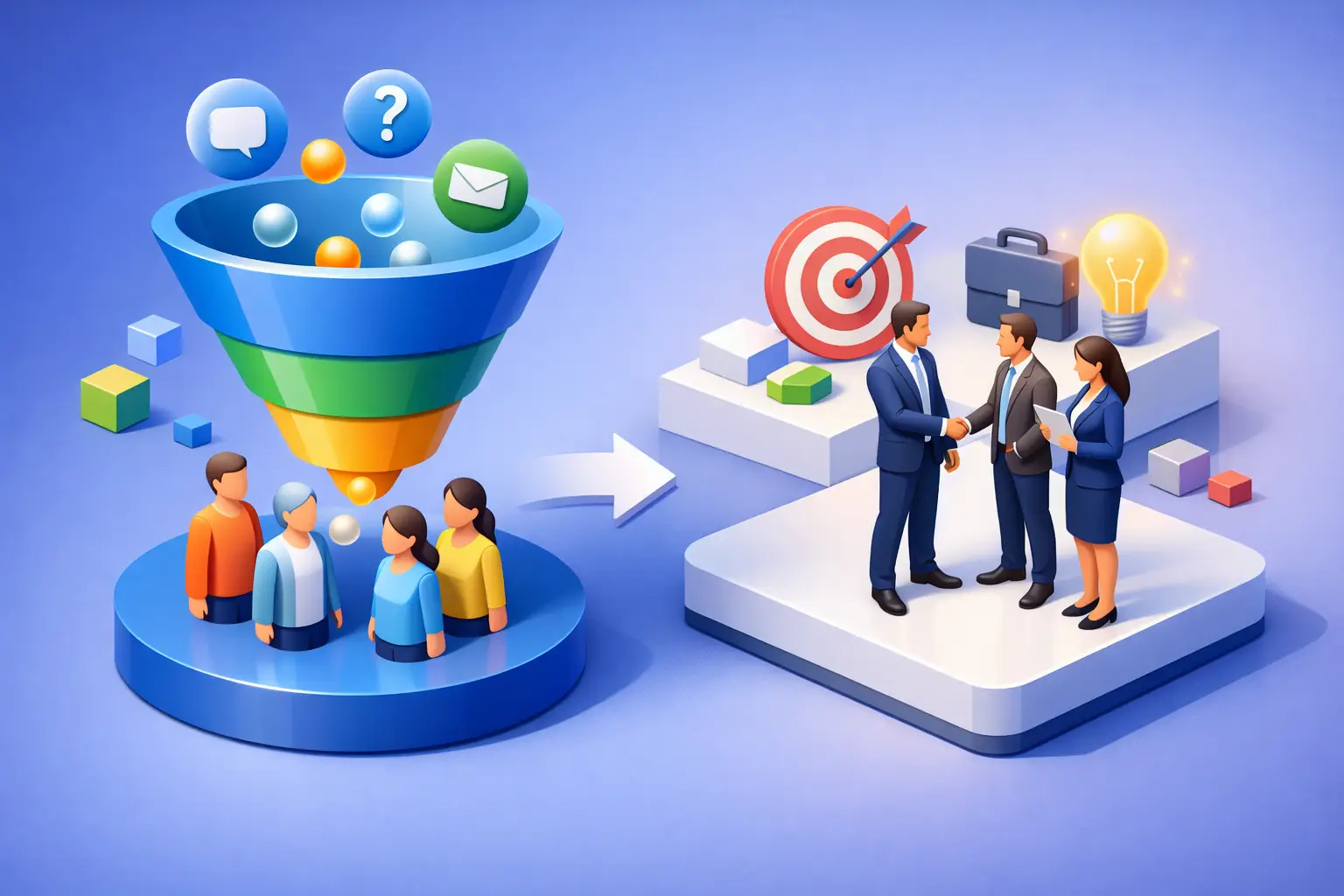
A lead is usually the starting point. It is a person or business that has shown some level of interest or matches your target audience enough to enter your system. They may have filled out a form, subscribed to your list, responded to an ad, visited key pages on your site, or been added from a referral or event.
A prospect is a step further. A prospect is a lead that has been qualified in some meaningful way. They fit your ideal customer profile, have a possible need, and show signs they could realistically buy. In other words, every prospect starts as a lead, but not every lead becomes a prospect.
That distinction is not just semantics. It affects who gets nurtured, who gets a call, who enters an automated sequence, and who deserves immediate attention from sales.
Why the lead and prospect distinction changes results
When sales and marketing collapse everything into one bucket, they create friction without realizing it. Marketing celebrates volume. Sales complains about quality. Leadership looks at a dashboard full of contacts but still cannot answer the most basic question: who is actually close to buying?
Separating lead and prospect stages fixes that. It gives marketing room to generate interest at scale without pretending every new contact is sales-ready. It also gives sales a cleaner queue, so reps spend more time on people with real buying potential instead of chasing every name that enters the database.
This is where smaller teams often lose money. Not because they lack leads, but because they waste effort treating cold names and active buyers the same way. If your follow-up process is built around one generic pipeline, your team is doing too much manual sorting and too little selling.
What usually qualifies a lead into a prospect
The exact handoff depends on your business model, price point, and sales cycle. A local service business may qualify a prospect based on service area, timeline, and budget. A B2B company may care more about company size, decision-maker role, and urgency.
Still, the core idea stays the same. A prospect has enough evidence attached to the record that your team can justify direct sales attention.
That evidence often includes fit and intent. Fit means they resemble the kind of customer you want. Intent means they are showing behavior that suggests a real buying journey, not casual browsing.
Here are common signals that a lead is becoming a prospect:
- They requested a demo, quote, or consultation
- They replied to outreach with questions tied to timing or pricing
- They match your target market by industry, size, location, or use case
- They engaged with multiple high-intent pages or campaigns
- They were referred by an existing customer or partner
None of these signals should exist in isolation forever. The point is to combine them into a practical qualification rule your team can actually use.
Where small businesses get this wrong
The most common mistake is over-labeling. Teams call every new contact a prospect because it sounds more valuable. That may feel good in a weekly meeting, but it creates fake momentum. If your pipeline looks full but conversion rates stay weak, this is usually part of the problem.
The second mistake is under-defining stages. A business might have contacts, leads, prospects, opportunities, and customers in the CRM, but nobody can explain the rule for moving from one stage to the next. That leads to duplicate work, stalled deals, and random follow-up.
The third mistake is tool fragmentation. One platform captures forms, another sends emails, another tracks appointments, and another stores notes. By the time a lead becomes a prospect, key context is already lost. Sales has incomplete data. Marketing has no clean feedback loop. Management has reports that do not match reality.
For a growing business, that setup is expensive twice. You pay for too many tools, and you also pay in missed revenue.
How to define lead and prospect in a usable way
Keep it simple enough that your whole team can follow it without needing a training manual.
A practical definition for many small businesses looks like this: a lead is any new contact who enters your system and matches at least a basic audience filter. A prospect is a lead who has been qualified for fit and has shown enough intent to justify active sales follow-up.
That framework works because it is operational, not theoretical. It tells your team what to do next.
Your marketing team can focus on generating and nurturing leads. Your sales team can focus on engaging prospects. Your automation can support both stages differently. Cold educational follow-up makes sense for leads. Personal outreach, booking prompts, pricing emails, and task assignments make sense for prospects.
How automation should treat leads and prospects differently
This is where the payoff gets real. If your system recognizes the difference between a lead and prospect, automation becomes far more useful.
Leads should usually enter nurture flows. That could mean welcome emails, educational content, retargeting, SMS reminders, or periodic check-ins designed to build interest and gather more data. The goal is not to push too hard too early. It is to warm them up and identify intent.
Prospects need a different path. They should trigger faster, more direct actions such as sales notifications, meeting booking prompts, follow-up deadlines, proposal workflows, or pipeline updates. Once someone is qualified, speed matters.
This is one reason all-in-one systems are so powerful for small teams. When lead capture, email, conversations, scheduling, and pipeline management live in one place, the transition from lead to prospect happens with context intact. No exporting lists. No bouncing between tools. No delay while someone manually updates three different apps.
A simple example of lead and prospect in action
Say you run a digital agency. Someone downloads your website optimization checklist. That person is a lead. They have shown interest, but you do not know if they have budget, authority, or an active project.
A week later, they open three emails, visit your pricing page twice, and book a call. Now they are likely a prospect. Why? Because the behavior moved from casual interest to commercial intent.
Or imagine you run a local med spa. A new contact comes in through a social ad for skin treatments. That is a lead. If they complete a consultation form, select a service, choose a preferred appointment window, and confirm they are in your service area, they move closer to prospect status.
The exact criteria vary, but the pattern does not. A lead becomes a prospect when there is enough fit and intent to move from marketing attention to sales attention.
Build stages your team can trust
If you want cleaner forecasting and better close rates, start by tightening your definitions. Pick the criteria that matter in your business. Document them. Put them inside your CRM. Then make sure automations, reports, and team habits all follow the same logic.
Do not make this more complicated than it needs to be. Most small businesses do not need ten lifecycle stages. They need a few clear ones, used consistently, across the whole customer journey.
That is also why platform simplicity matters. A system like TwiLead helps small businesses centralize lead capture, qualification, follow-up, booking, communication, and pipeline management without stacking five or six separate tools. When your process is simpler, your team is faster. When your data is cleaner, your decisions get better.
The businesses that scale well are rarely the ones with the most software. They are the ones with the clearest process. Get lead and prospect defined the right way, and the rest of your sales machine gets easier to run.