Key Takeaways
- Most small businesses do not have a lead problem but a handoff problem: ads bring clicks, then follow-up slows down.
- Start with better leads, not just more leads, and understand the real bottlenecks.
- Conversion optimization is mostly about reducing hesitation, and speed is a conversion strategy.
- One dashboard beats a software pileup, so make it easy for people to buy.
Introduction
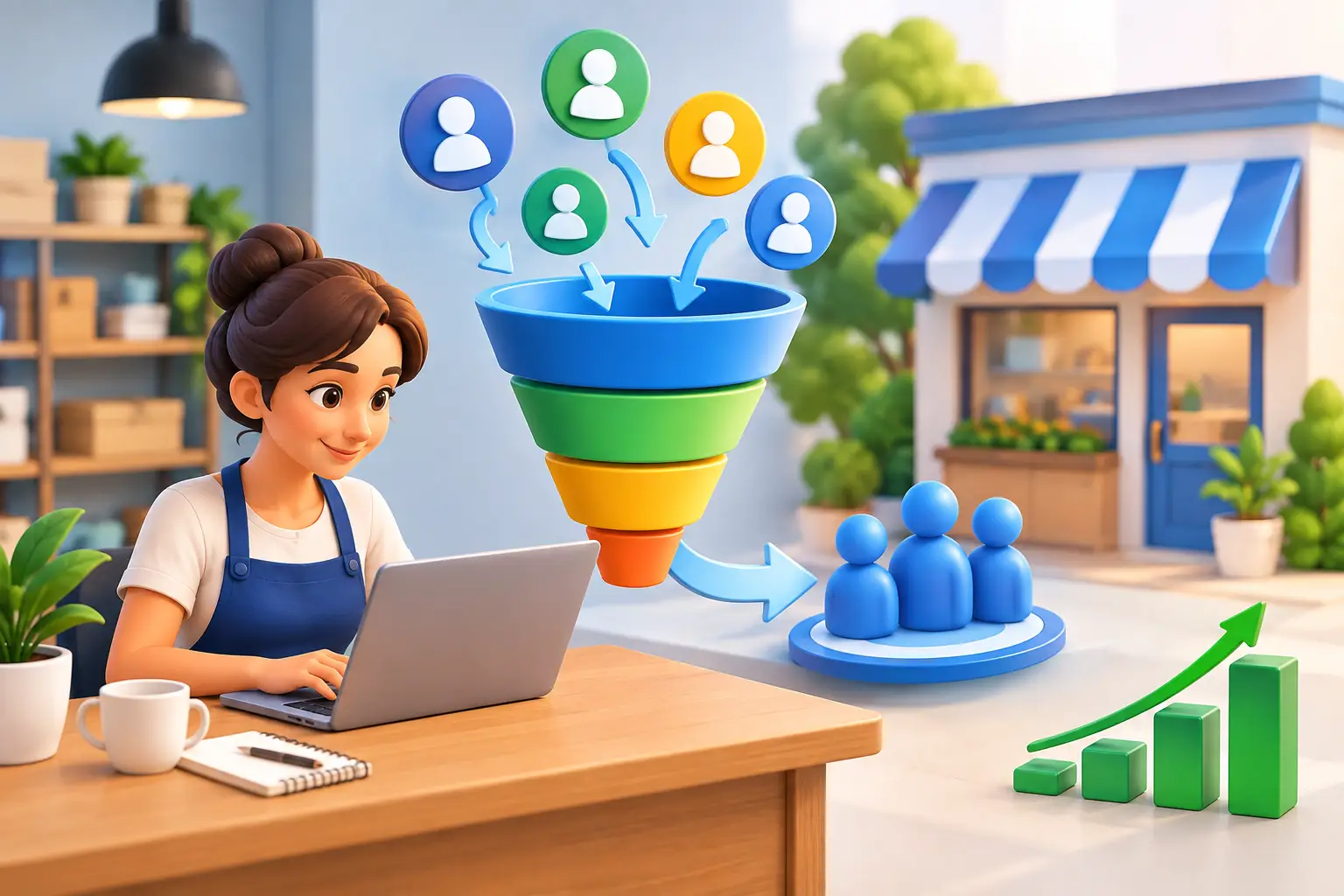
Most small businesses do not have a lead problem. They have a handoff problem. The ads bring clicks, the website gets visits, a few forms come in, and then everything slows down. Follow-up is late, messages get missed, and warm prospects cool off while the business owner jumps between five different tools. That is why lead generation and conversion optimization need to be treated as one system, not two separate jobs.
If you only focus on getting more traffic, you can end up paying to create chaos. If you only focus on improving conversions, you may polish a weak pipeline that never produces enough opportunities. Real growth happens when you attract the right people and make it easy for them to take the next step, with fast follow-up and less manual work behind the scenes.
Why lead generation and conversion optimization belong together
A lot of software companies split these functions into different categories. Marketing gets leads. Sales closes them. Operations keeps everything moving. On paper, that sounds organized. In reality, small businesses rarely have the time or headcount to run those departments separately.
What usually happens instead is fragmented work. One tool captures form submissions, another sends emails, another books appointments, and another stores customer notes. Every gap between those tools creates friction. Friction kills conversion rates long before a prospect says no.
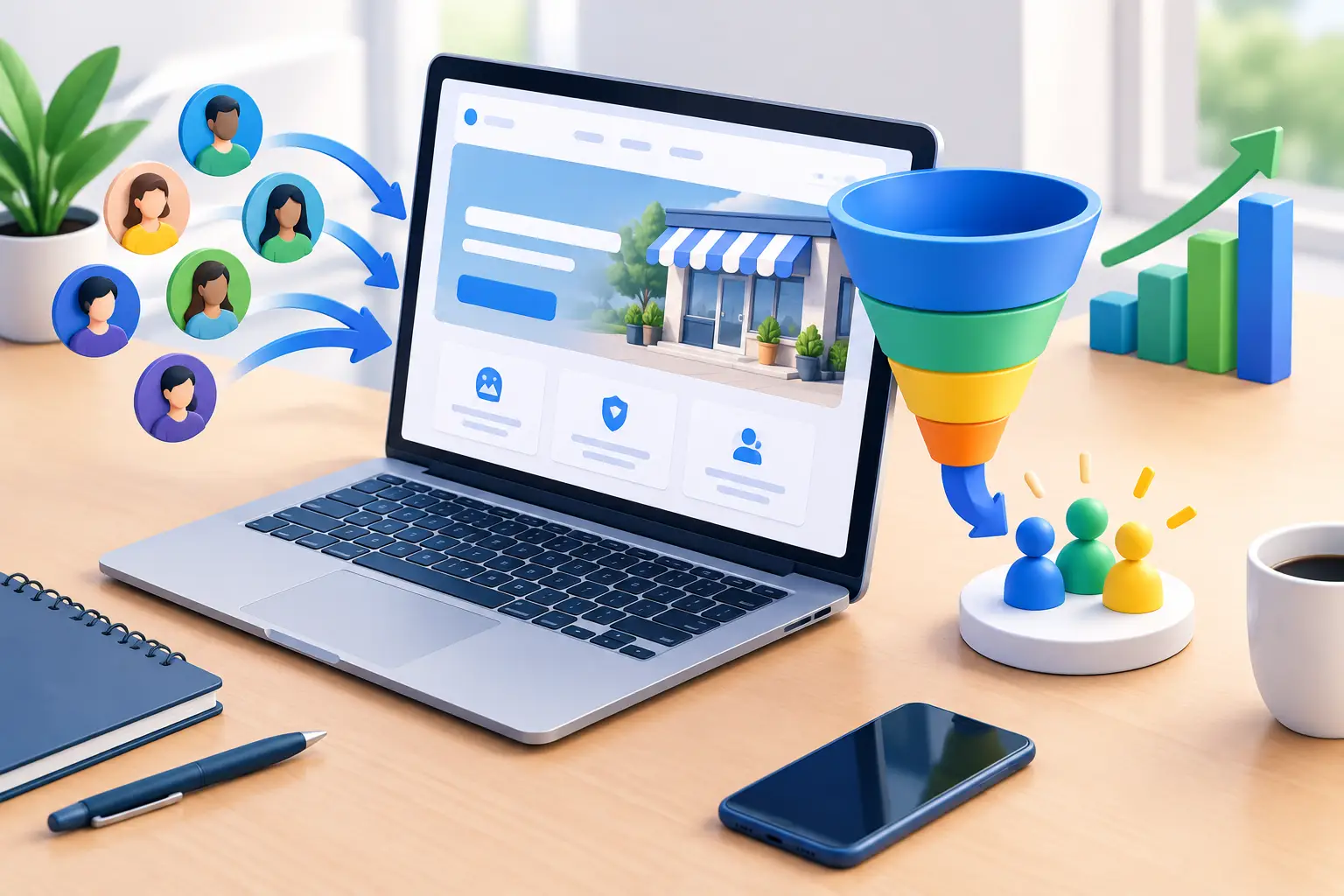
Lead generation is about attracting attention from people who are likely to buy. Conversion optimization is about removing the reasons they hesitate, stall, or disappear. Put together, they create a cleaner path from first click to paid customer.
That path matters more than vanity metrics. A campaign that brings in 30 qualified leads and converts 20 percent of them is worth more than one that brings in 200 weak leads and buries you in follow-up. Volume feels productive. Conversion pays the bills.
The real bottlenecks small businesses face
For most small business owners, the issue is not a lack of effort. It is tool overload, slow execution, and inconsistent follow-up.
You might have a website builder on one subscription, email software on another, a booking tool somewhere else, and a CRM that only gets updated when someone remembers. Add social scheduling, texting, invoices, and automations, and your stack starts looking like a monthly leak in your bank account.
This creates two expensive problems. First, your lead data gets scattered, which makes personalization weaker and follow-up slower. Second, your team spends more time managing software than moving prospects toward a sale.
That is why simplification is a growth strategy, not just an operational preference. When your forms, pipeline, email, calendar, conversations, and workflows live in one place, you reduce the lag between interest and action. That alone can lift conversions.
Start with better leads, not just more leads
The first half of lead generation and conversion optimization is attracting people who match your offer. That sounds obvious, but many businesses chase reach before relevance.
If you run a local service business, broad traffic from outside your service area is not growth. If you sell coaching, generic traffic from people looking for free advice is not demand. Better lead generation starts with tighter targeting, clearer offers, and messaging that filters out poor-fit prospects.
A stronger offer does more than increase clicks. It pre-qualifies interest. Free estimates, fast consultations, online booking, limited-time service bundles, and specific outcomes can all work well, but only if they match buyer intent. Someone searching for urgent help needs speed. Someone comparing providers needs proof. Someone price sensitive needs clarity and reassurance.
This is where many websites underperform. They say too much about the business and not enough about the problem being solved. Prospects do not need a tour of your company history on the first visit. They need a reason to believe you can help and a simple next step they can take right now.
Want to know how you could improve your business?
Our team is available for a free consultation.
Conversion optimization is mostly about reducing hesitation
A lot of people think conversion optimization means button colors and headline tests. Those details matter, but they are not the main event for most small businesses.
The bigger wins usually come from reducing hesitation. That means answering the questions that stop people from acting. What does this cost? How fast can I get started? What happens after I submit this form? Can I talk to a real person? Is this business trustworthy? To convert more, use the SONCAS method to address each buyer’s real motivation.
Every page should move a prospect one step forward. If your homepage asks them to figure everything out on their own, you are adding work at the exact moment they are deciding whether to trust you.
Strong conversion pages have a clear promise, a visible call to action, social proof, and a next step that feels low friction. Sometimes that next step is a demo. Sometimes it is a quote request, a booking link, a text conversation, or a short form. It depends on the business model and buying cycle.
Long forms can improve lead quality, but they can also choke response volume. Short forms increase submissions, but some leads will be less qualified. There is no universal winner. The right choice depends on whether your bigger constraint is quality, quantity, or follow-up capacity.
Speed is a conversion strategy
The fastest business often wins.
Not because it has the best branding or the biggest budget, but because people buy when interest is fresh. If a lead submits a form and waits six hours for a response, your competitor has a head start. If they can book instantly, get an automated confirmation, and receive a timely follow-up, you keep momentum on your side.
This is where automation stops being a nice extra and becomes part of conversion optimization. Automated responses, lead routing, reminders, missed-call text back, follow-up sequences, and pipeline triggers all help you respond at speed without hiring a bigger team.
Automation does have a trade-off. Too much of it can make your business feel generic. The goal is not to replace human contact. The goal is to make sure human contact happens faster and more consistently.
One dashboard beats a software pileup
The biggest hidden cost in lead generation is not ad spend. It is disconnected execution.
When your leads live in one tool, your emails in another, and your appointments in a third, you create delays, duplicate work, and missed opportunities. You also make reporting harder, which means you cannot tell what is actually driving revenue.
An all-in-one system changes that equation. Instead of stitching together separate subscriptions, you can capture leads, nurture them, book meetings, manage conversations, send estimates, and track deals from one place. For a small business, that is not just cleaner. It is cheaper and easier to run.
This is exactly why platforms like TwiLead appeal to owners who are tired of paying enterprise-level software costs for a patchwork setup. Consolidation reduces friction for your team and for your prospects. Both matter.
How to improve lead generation and conversion optimization without overcomplicating it
Start by mapping your real customer journey, not the one you wish existed. Where do leads first find you? What action do they take next? How long does it take your team to respond? Where do prospects drop off?
Then tighten the basics. Make your offer clearer. Reduce the number of clicks between interest and action. Add one primary call to action per page instead of forcing people to choose between six directions. Use automation for immediate acknowledgment and follow-up, but keep a human path visible.
Next, review your lead sources by revenue, not just by volume. Some channels look good in reports because they drive cheap leads, but cheap leads that never close are expensive. A source that generates fewer inquiries but better customers may deserve more budget.
Finally, look at your stack. If your growth process depends on too many separate tools, you are probably paying twice – once in subscriptions and again in lost conversions.
The businesses that win make it easy to buy
Small businesses do not need more complexity dressed up as scale. They need a direct path from interest to revenue.
Lead generation and conversion optimization work best when the experience feels simple on both sides. The prospect finds the offer quickly, understands the value, takes the next step without friction, and gets a fast response. The business owner sees the lead, knows where it came from, follows up automatically, and moves it through the pipeline without chasing data across multiple apps.
That is the standard worth building toward. Not a bloated stack. Not a maze of disconnected software. Just a system that helps you generate demand, capture it, and close it before it slips away.
If your marketing is working harder than your conversion process, do not buy more traffic yet. Fix the path first, and growth gets a lot less expensive.