Key Takeaways
- Customer churn often results from poor follow-up, unclear value, and difficult booking experiences.
- Effective onboarding and relevant communication significantly reduce customer churn.
- Address service issues with transparency and focus on recovery to retain customers.
- Regularly engage past customers to minimize churn and encourage repeat business.
- Monitor signals of churn to act proactively and improve customer retention strategies.
Intoduction
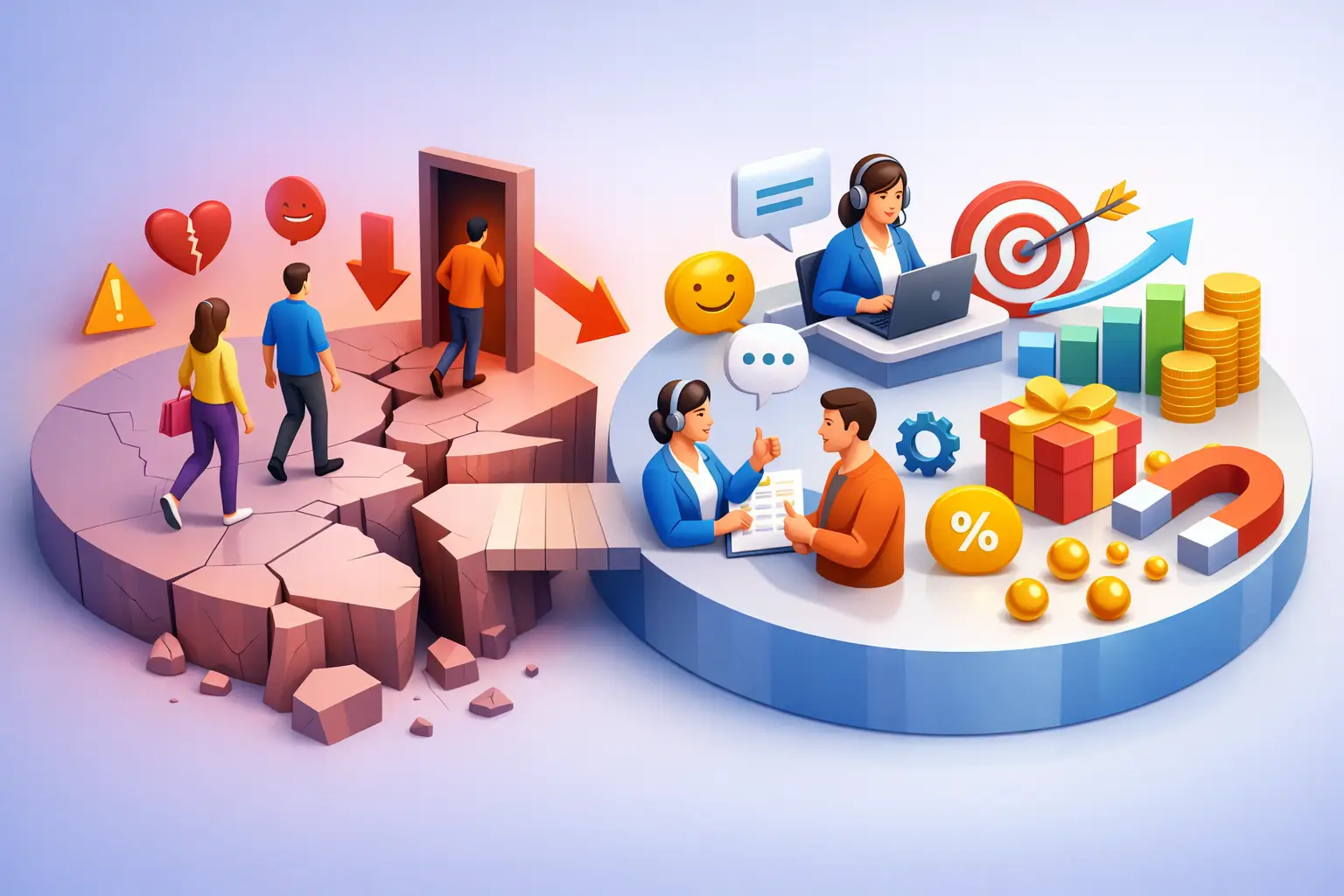
A customer rarely leaves because of one bad moment. More often, they drift away after a missed follow-up, a confusing handoff, an unresolved issue, or weeks of silence. Understanding what causes customer churn gives small businesses a practical chance to protect recurring revenue before it disappears.
Churn is not only a subscription-business problem. A local contractor who never hears from past clients again, a coach with clients who fail to renew, and an agency that loses retainers all face the same issue: customers stop buying when the value, experience, or relationship breaks down.
The good news is that many churn drivers are fixable without offering steep discounts or adding more staff. The first step is knowing where customers lose confidence.
What Causes Customer Churn Most Often?
Customer churn happens when people believe switching, delaying, or doing nothing is easier than continuing to buy from you. Sometimes price is the reason. More often, price is the final justification after other problems have gone unaddressed.
1. Slow or inconsistent follow-up
A prospect asks for a quote, books a consultation, or sends a question. Then they wait. By the time someone responds, they have found another provider or lost momentum entirely.
The same issue affects existing customers. If a client needs help and gets a response two days later, they do not experience your business as dependable. They experience it as difficult to work with.
Small businesses do not need to be available every minute. They do need a clear response standard. Use instant confirmation messages, route inquiries to the right person, and set reminders so no conversation sits unattended. A quick acknowledgment can buy you time, while silence creates doubt.
2. Customers do not see ongoing value
Customers may like your service but still leave if they cannot connect it to a result. This is especially common for consultants, agencies, coaches, and recurring service businesses. You are doing useful work, but the customer does not see progress often enough.
Do not assume clients remember every win. Show them. A monthly update can highlight leads generated, appointments completed, time saved, jobs finished, or the next milestone. For a home services company, that could be seasonal maintenance reminders and a clear record of past work. For an agency, it could be a short report connecting activity to leads and sales conversations.
Value should be visible between purchases, not only at renewal time. The trade-off is that regular communication takes discipline. But it is far less expensive than constantly replacing customers who quietly disappear.
Want to know how you could improve your business?
Our team is available for a free consultation.
3. A difficult buying or booking experience
If booking requires back-and-forth emails, a payment link is hard to find, or a form fails on mobile, customers feel friction before they receive any value. Many will not complain. They will simply abandon the process.
Look at your customer journey from the buyer’s point of view. Can someone request service, schedule a time, receive confirmation, ask a question, and pay without having to chase multiple links or repeat their information? Every unnecessary step is a chance to lose them.
This is where disconnected tools often create a hidden churn problem. One system holds contact details, another handles booking, another sends emails, and another processes invoices. Information falls through the gaps. Customers receive duplicate messages, wrong reminders, or no follow-up at all.
A simpler connected process does not just save administrative time. It makes your business easier to buy from and easier to stay with.
4. Poor onboarding after the sale
The sale is not the finish line. It is the moment when a new customer decides whether they made a good choice.
A weak onboarding experience leaves people uncertain about what happens next. They may not know how to prepare, who to contact, when results should appear, or how to use what they bought. That uncertainty creates buyer’s remorse, even when your core service is strong.
Set expectations early. Send a welcome message that explains the next step, timing, responsibilities, and the fastest way to get help. For services with several stages, send brief progress updates before customers have to ask.
The right onboarding process depends on the business. A realtor may focus on communication cadence and showing preparation. A marketing consultant may focus on access, goals, and reporting. In both cases, clarity prevents the customer from feeling forgotten after payment.
5. Generic communication that feels irrelevant
Customers do not want more messages. They want messages that matter.
Sending every contact the same promotion can make a business look inattentive. A new lead needs education and confidence. A current customer may need a service reminder, a useful tip, or an easy renewal option. A former customer may need a timely reason to return.
Basic segmentation makes a major difference. Group people by relationship stage, service purchased, location, or last interaction. Then communicate with context. A dentist’s office might send recall reminders to existing patients, while a local landscaper can send season-specific offers based on previous work.
Personalization does not require writing every message by hand. It requires keeping customer information organized and using it to trigger relevant outreach. Done well, automation makes communication more personal because it arrives at the right moment.
6. Service problems that are handled defensively
Mistakes happen. Appointments run late, a deliverable misses the mark, and a product may not meet expectations. The service failure itself is not always what causes churn. The response often is.
Customers want to feel heard and taken seriously. A defensive reply, a vague promise, or a request to repeat their story turns a small issue into a reason to leave. In contrast, a clear acknowledgment and a specific recovery plan can strengthen trust.
Give your team a simple way to log issues, assign ownership, and follow up after the fix. Look for patterns instead of treating every complaint as isolated. If several customers ask the same question or experience the same delay, the process needs repair.
Do not overcorrect by promising anything to keep every unhappy customer. Some requests will not be reasonable or profitable. The goal is consistent, fair recovery when your business has fallen short.
7. Price increases without a stronger value story
Price sensitivity is real, particularly for small business customers and consumers managing tight budgets. But lowering prices is not a retention strategy by itself. It can reduce margins without giving customers a better reason to stay.
Before a price increase, explain what customers receive, what has improved, and what alternatives would cost them in time or results. After the increase, make sure the service experience supports the new price point.
If churn rises after pricing changes, investigate before assuming the price is the only issue. Were customers surprised? Did renewal reminders arrive too late? Did lower-value customers leave while your best-fit customers stayed? The answers shape a smarter response than a blanket discount.
8. No reason to come back
Some businesses focus so intensely on winning new leads that past customers receive almost no attention. That creates avoidable churn and forces the business to keep paying for customer acquisition.
Create a practical re-engagement rhythm. Follow up after a completed project, ask whether the outcome met expectations, and remind customers when a related service or maintenance need is likely to arise. Ask satisfied customers for referrals when the positive experience is fresh.
For example, a cleaning company can send a simple recurring-service offer after a one-time deep clean. A business coach can schedule a 90-day check-in after a program ends. A web design agency can offer periodic review sessions to identify conversion issues before a client starts shopping elsewhere.
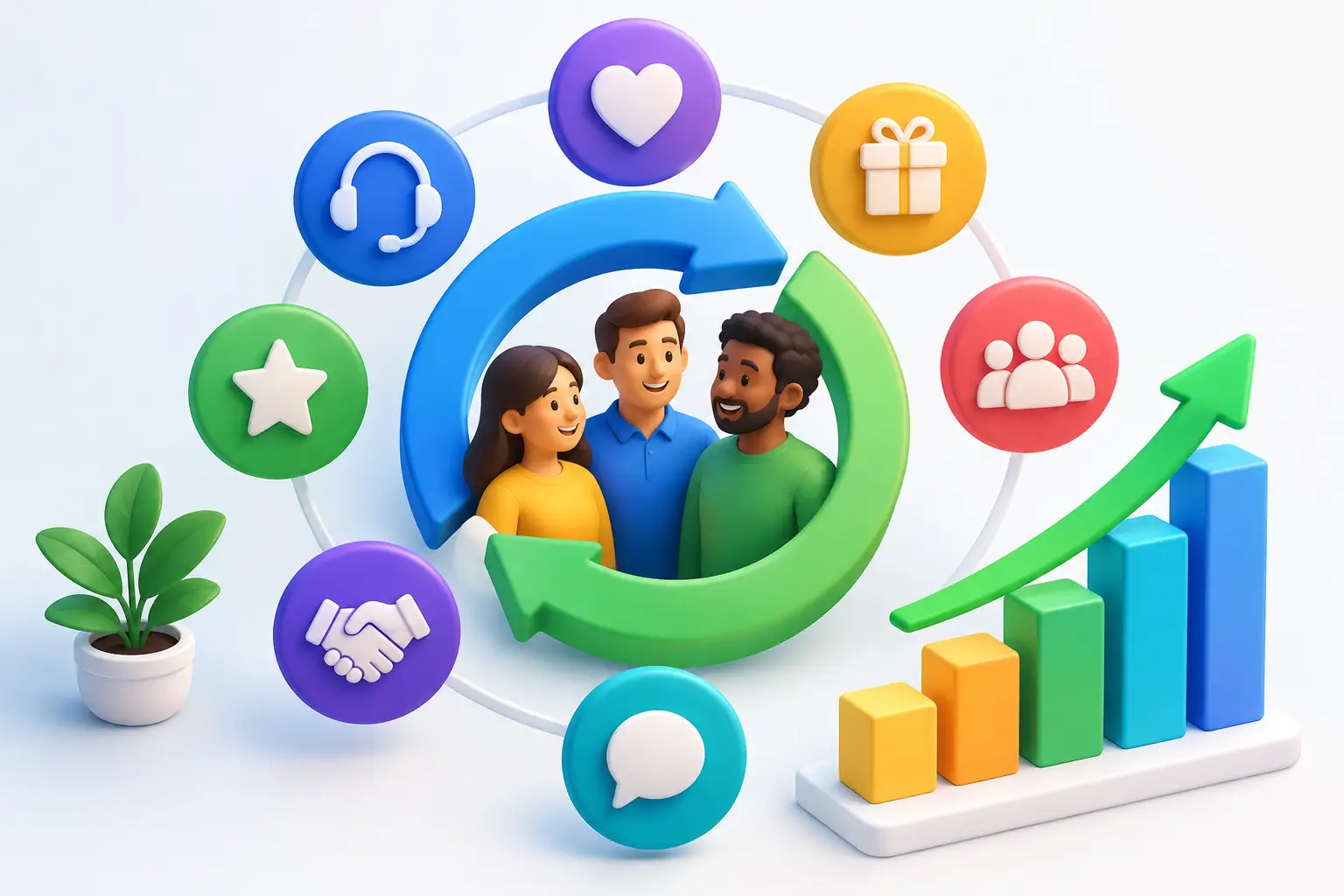
The objective is not to pressure people. It is to remain useful and visible when the next need appears. Fixing churn is the foundation of flywheel marketing, where customers reinforce growth.
How to Spot Churn Before It Happens
Churn usually gives off signals. Customers may stop opening messages, cancel appointments, delay payments, go quiet after onboarding, use less of your service, or suddenly ask about contract terms. One signal alone may mean nothing. A pattern deserves attention.
Track a few simple measures each month: renewals, repeat purchases, canceled appointments, response time, unresolved issues, and customers who have not engaged in a set period. For many small businesses, this level of visibility is enough to reveal where revenue is leaking.
Then assign an action to each warning sign. A missed appointment should trigger an easy rescheduling message. A client who has not engaged for 30 days may need a personal check-in. A support issue should remain open until the customer confirms it is resolved.
Build Retention Into Your Daily Process
Retention is not a one-time campaign. It is the result of reliable follow-up, clear communication, easy buying, and visible customer value.
Start with the biggest gap in your current process. If leads are being lost after inquiry, fix response speed first. If clients leave after the first month, improve onboarding. If former customers never return, build a re-engagement sequence. Trying to repair everything at once usually creates more complexity.
A single platform that keeps conversations, bookings, customer records, payments, and follow-up workflows in one place can make that work easier. TwiLead is built around this practical goal: fewer disconnected systems, fewer missed handoffs, and more time spent building customer relationships.
Customers stay when doing business with you feels clear, responsive, and worthwhile. Make those qualities consistent, and retention becomes less about chasing people back and more about giving them a reason not to leave.