Key Takeaways
- Small businesses often face lead generation problems due to scattered interest, not a lack of leads.
- Effective lead generation focuses on creating a clear, repeatable path for prospects to engage and convert into customers.
- A strong lead offer should be specific and relatable, guiding prospects toward the next step in their journey.
- Speed to lead is critical: responding quickly gives a competitive advantage over slower competitors.
- Consistent follow-up and tracking prevent lost opportunities, while measuring relevant metrics helps improve lead generation effectiveness.
Introduction
Most small businesses do not have a lead problem because nobody knows they exist. They have a lead generation problem because interest gets scattered across a website, inbox, social messages, calls, and missed follow-ups. A prospect asks for a quote, downloads an offer, or books a consultation, then hears nothing for two days. By then, a faster competitor has already won the work.
The answer is not adding more marketing channels or buying another disconnected tool. It is building a simple, repeatable path that turns attention into conversations and conversations into customers.
What Lead Generation Should Do for Your Business
Lead generation is the process of attracting people who may need what you sell, capturing their information, and giving them a clear next step. For a local service company, that might mean a homeowner requesting an estimate. For a coach, it could be someone booking a discovery call. For an agency, it may be a business owner asking for a proposal.
The goal is not to collect the largest possible contact list. A large list full of people who will never buy creates busywork and distorts your marketing numbers. A better goal is a steady flow of qualified prospects who fit your offer, can afford it, and have a reason to act soon.
That distinction changes how you market. Instead of asking, “How can I get more leads?” ask, “How can I make it easier for the right people to take the next step?” The strongest systems remove friction at every stage: clear messaging, a simple form, fast replies, easy scheduling, and reliable follow-up.
Every lead generation system needs a capture point, so compare the best lead form apps before you build yours.
Start With One Clear Offer
Many small business websites bury the offer under vague statements such as “quality service” or “solutions tailored to you.” Prospects do not need more mystery. They need to know what you do, who it is for, what result they can expect, and how to begin.
A strong lead offer does not have to be a discount. In fact, discounts can attract price shoppers who are difficult to convert and retain. The best offer depends on your business model. A plumber may offer a same-day estimate request. A real estate professional may offer a neighborhood pricing review. A consultant may offer a focused 20-minute strategy call. A web agency may offer a website conversion audit.
Want to know how you could improve your business?
Our team is available for a free consultation.
Make the call to action specific and visible. “Get started” is weaker than “Request your free roof estimate” or “Book a 20-minute growth call.” Specific language helps prospects self-select and gives them confidence about what happens next.
Your landing page, website, social profiles, and paid ads should point toward the same primary action. Giving visitors five different choices often lowers response. One main offer is easier to understand, measure, and improve.
Build a Lead Generation Path, Not a One-Time Campaign
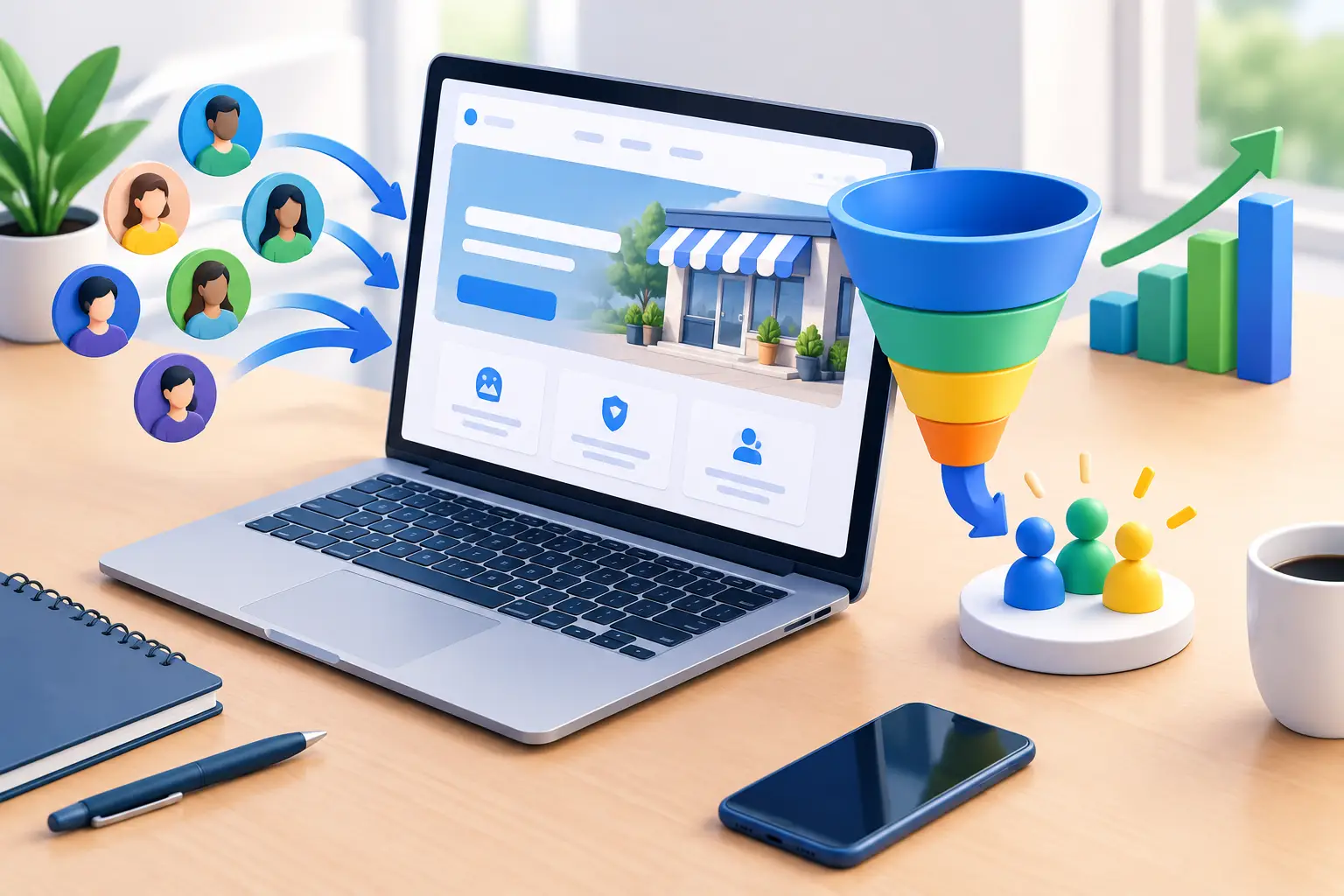
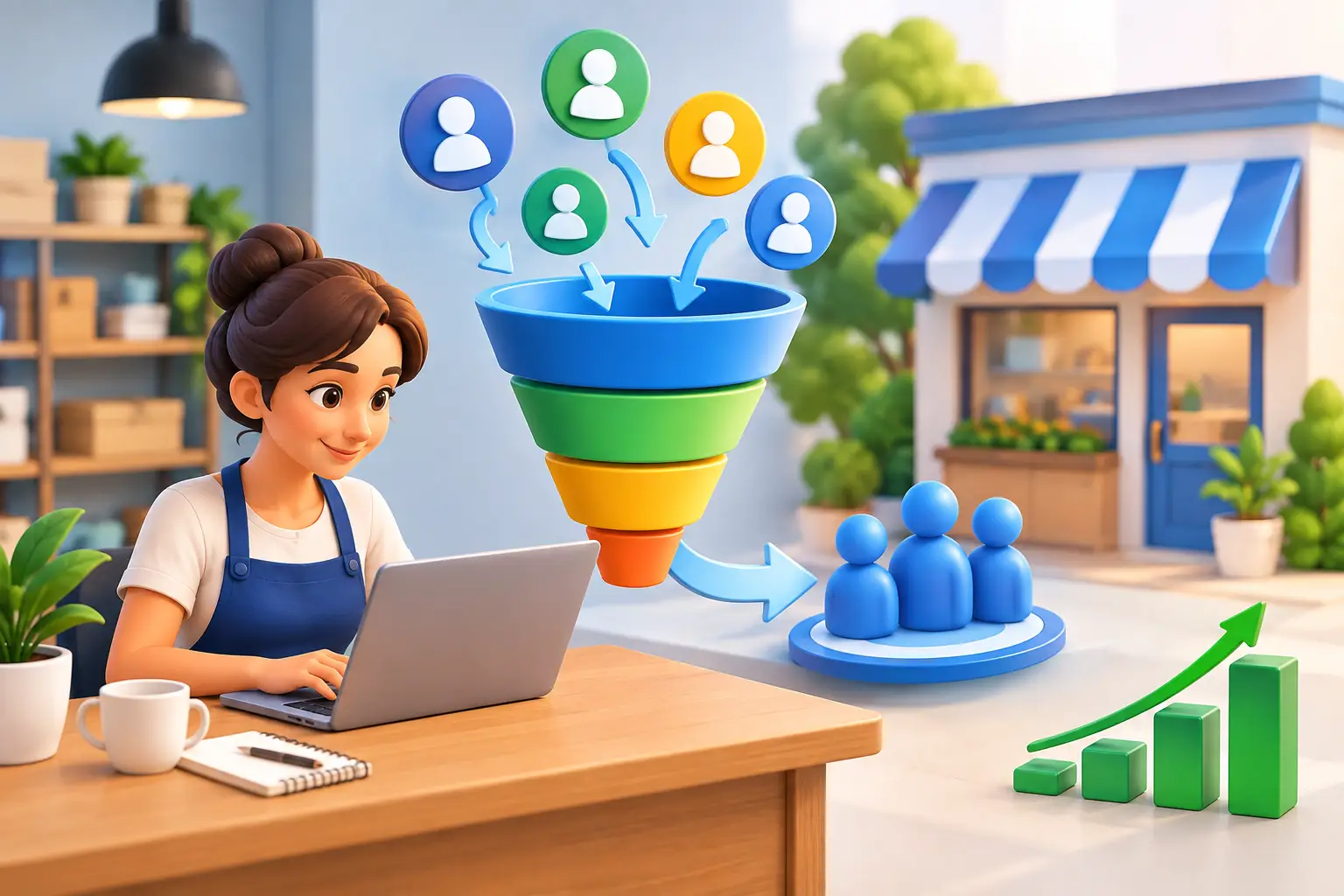
A campaign can create a short burst of inquiries. A system creates consistent opportunities without forcing you to rebuild your marketing every month. For most small businesses, the path is straightforward:
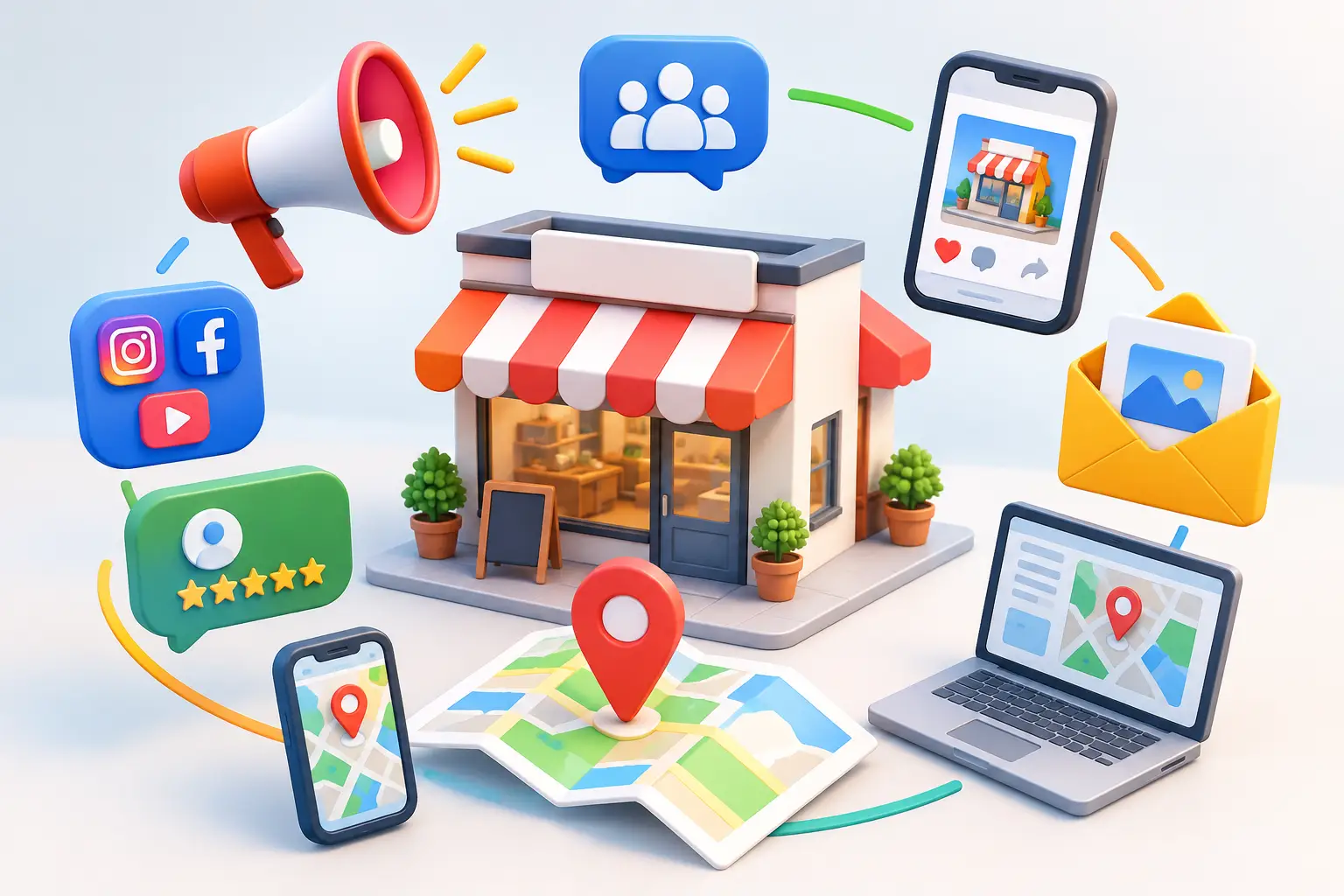
- A prospect finds you through search, referrals, social media, local listings, or an ad.
- They see a clear reason to contact you or book time.
- Their details enter one organized place.
- They receive an immediate confirmation and useful next step.
- Your team follows up until there is a clear outcome.
The weak point is usually the middle. A business may spend money driving traffic to a site, then send form submissions to an inbox that nobody checks consistently. Or it may let prospects schedule a call, but never send reminders. These are not marketing failures. They are process failures, and they cost real revenue.
Connect lead capture directly to your sales process. When someone submits a form, the contact should be recorded automatically, assigned a status, and given a timely response. If they book an appointment, reminders should reduce no-shows. If they do not respond, a short follow-up sequence should keep the conversation alive without making your team chase every lead manually.
Speed to Lead Is a Competitive Advantage
When a prospect reaches out, they are usually comparing options. The business that responds first has a meaningful advantage, especially in competitive local services, real estate, and professional consulting.
Fast does not always mean a salesperson must respond instantly. An automatic text or email can confirm that the inquiry was received, set expectations, and offer a scheduling link. For common website questions, an AI website assistant can answer basic questions and capture details after hours. That keeps momentum going while you are serving customers, driving between jobs, or off the clock.
The key is to make the first response useful. “We received your message” is acceptable. “Thanks for requesting an estimate. Choose a time that works for you, or reply with photos of the project so we can prepare a faster quote” is far better. It moves the prospect forward.
Set a response standard you can actually meet. For high-intent leads, aim for minutes during business hours, not days. If your workload makes that difficult, automate the acknowledgment and create a simple task process so no inquiry disappears.
Qualify Without Making It Hard to Contact You
Business owners sometimes react to low-quality leads by making forms longer. That can filter out poor fits, but it can also discourage good prospects. The right balance depends on the value and complexity of your sale.
For a simple service request, ask only for the information needed to respond: name, contact details, location if relevant, and a brief description of the need. For higher-ticket services, add two or three questions that reveal fit, such as timeline, budget range, property type, or business goal.
Use those answers to guide the next step. Someone who needs help this week should be routed to scheduling or a rapid callback. Someone researching a project for later may need helpful emails, case examples, or a reminder to reconnect. Qualification is not about rejecting people. It is about giving each prospect the right experience without treating every inquiry exactly the same.
Follow Up Like a Professional, Not a Pest
Many deals are lost after the first contact, not before it. Prospects get distracted, compare options, need approval from a partner, or simply forget. A thoughtful follow-up process protects opportunities your business already earned.
Start with a short sequence over several days or weeks, based on your sales cycle. The first message should confirm the next step. The second can answer a common objection or share a relevant example. A later message can create a reason to respond, such as limited appointment availability or a useful planning tip.
Avoid empty messages like “Just checking in.” Give the prospect something that makes replying easier: “Are you still considering a kitchen remodel this fall?” or “Would you like me to hold a consultation time next week?” Simple, direct questions get better responses.
Track every lead in a visible pipeline with stages such as New Inquiry, Contacted, Appointment Set, Proposal Sent, Won, and Lost. This shows where revenue is getting stuck. If many leads reach Proposal Sent but few close, your issue may be pricing, sales conversations, or proposal speed. If leads never reach Contacted, the issue is response time and ownership.
Measure the Numbers That Lead to Revenue
Vanity metrics can be misleading. A post with thousands of views is not necessarily helping the business grow. Focus on the numbers that reveal whether your lead system is producing profitable opportunities.
Watch lead volume, but also track lead-to-appointment rate, appointment show rate, proposal rate, close rate, and cost per acquired customer. If you run paid advertising, compare the cost of a lead with the revenue those leads actually produce. A cheaper lead source is not better if it brings prospects who rarely buy.
Review these numbers monthly. You do not need a complex reporting project. You need enough visibility to make one smart improvement at a time. Improve the offer, shorten the form, speed up responses, strengthen reminders, or refine your targeting. Small gains at each step can produce a major change in monthly revenue.
Keep the System Simple Enough to Use
A lead generation system only works when it is used consistently. That is why a stack of separate tools often becomes expensive and ineffective. One tool holds contact forms, another sends emails, another schedules appointments, another tracks deals, and another automates follow-up. The gaps between them are where leads get lost.
Small businesses benefit from having lead capture, customer communication, scheduling, pipeline tracking, and automation in one place. It reduces duplicate data entry, gives everyone the same view of each opportunity, and makes follow-up easier to manage. TwiLead is designed around that practical outcome: helping businesses replace disconnected subscriptions with one system that supports the full path from first inquiry to closed sale.
Start with the process you can run well this month. Choose one offer, one primary conversion action, and one follow-up routine. Once every lead gets a fast, useful response, growth becomes less dependent on luck and far more within your control.