Creating a B2B marketing plan is essential for achieving your business goals and staying competitive in the market.
Basically, it’s your secret roadmap for hitting business goals without wandering blindly through the market jungle.
A solid plan keeps you focused, shows you where to invest your time and budget, and gives you the tools to actually measure whether all your brilliant ideas are working.
In this article, we’ll break down why a B2B marketing action plan matters, share real examples you can steal inspiration from, and walk you through the steps to build one that actually gets results.
What is a B2B Marketing Plan?
A B2B marketing action plan is an operational document that describes all the actions planned for a given period, usually a year, to achieve specific marketing objectives. It serves as a roadmap for your marketing efforts, detailing the strategies, tactics, timelines, and resources needed to reach your goals[1].
Key Components of a B2B Marketing Action Plan:
- Smart goals : Clear and measurable goals that align with your business strategy.
- Strategies: The overarching approaches you will take to achieve your objectives.
- Tactics: Specific actions and activities that support your strategies.
- Timelines: Deadlines and milestones for each tactic.
- Resources: Budget, personnel, and tools required to execute the plan.
- Metrics: Key performance indicators (KPIs) to measure success[2].
Why is a B2B Marketing Plan Important?
We guess you don´t want to arrive at the end of the year and realize all your marketing and sales efforts were a waste of time and money, right? Well, that´s what could happen if you don´t design a B2B marketing plan.
To avoid that scenario, we want to be crystal clear about why all marketing experts agree that to succeed as a B2B small business, you need to have a marketing plan.
A B2B marketing action plan is essential for several reasons:
- Strategic Alignment: Ensures that your marketing efforts align with your overall business strategy and objectives[3].
- Resource Allocation: Helps allocate resources effectively, ensuring that budget, personnel, and tools are used efficiently.
- Performance Measurement: Provides a framework for measuring the success of your marketing efforts and making data-driven decisions.
- Adaptability: Allows for adjustments based on market changes and new insights, ensuring long-term relevance.
Steps to Develop a Winner B2B Marketing Plan
Before diving into the nitty‑gritty, it’s important to remember one thing: great B2B marketing plans don’t happen by accident , they’re built intentionally, step by step.
Think of this process as assembling the blueprint for your future wins: each step sharpens your focus, strengthens your strategy, and ensures every action you take moves your business forward with purpose.
Here’s how to build a plan that doesn’t just sit pretty on paper, but actually drives results
1. Define Clear Objectives
Every winning B2B marketing plan starts with crystal‑clear objectives. Before you build campaigns, pick channels, or write a single headline, you need to know exactly what you’re trying to achieve, and why.
Setting specific, measurable goals gives your strategy direction, keeps your team aligned, and prevents you from chasing every shiny idea that pops up.

Think of your objectives as the GPS of your marketing plan: without them, you’re just burning fuel; with them, every action moves you closer to real, trackable business impact.
Some examples of smart goals:
- Increase qualified leads by 30% in the next year
- Reduce the sales cycle from 45 to 30 days by improving lead nurturing workflows
2. Conduct Market Research
This means understanding your industry landscape, spotting trends, identifying gaps, and analyzing what your competitors are doing right and wrong.
Research helps you discover what your audience truly cares about, how they make decisions, and what messages resonate with them.
The goal is simple: gather the insights that allow you to craft strategies based on evidence, not assumptions, so every move you make is informed, intentional, and aligned with real market demand.
3. Identify Key Strategies
Once you understand your market, your audience, and your goals, it’s time to decide how you’re actually going to win.
Identifying your key strategies means choosing the high‑impact approaches that will move the needle, whether that’s doubling down on content, investing in automation, refining your targeting, or launching new acquisition channels.
Think of this step as selecting the smartest battles to fight: instead of trying to do everything, you pick the strategies that align with your objectives, match your resources, and give you the best chance to stand out in your market.
Clear strategies keep your team focused and ensure every tactic that follows has a purpose.
4. Outline Specific Tactics
This is where big ideas become real actions: the emails you’ll send, the campaigns you’ll launch, the content you’ll produce, the automations you’ll build, and the channels you’ll activate.
Think of tactics as the “how‑to” behind your strategy.
They should be detailed, measurable, and easy for your team to execute without guesswork. The clearer your tactics, the smoother your execution.
5. Allocate Resources
A brilliant marketing plan means nothing if you don’t assign the right people, time, and budget to bring it to life.
Allocating resources is about being realistic: matching your ambitions with what your team can actually execute.
This step forces you to prioritize, decide where to invest, and ensure every tactic has the support it needs to succeed.
Think of it as giving your plan the fuel it requires.
6. Set Timelines and Milestones
Setting timelines and milestones helps you turn intentions into predictable progress.
By defining when each tactic starts, how long it should take, and what success looks like at each stage, you keep your team accountable and your strategy moving forward.

Milestones act like checkpoints: they let you celebrate wins, spot delays early, and adjust the plan before small issues turn into costly setbacks.
In short, timelines give your marketing plan momentum, and milestones make sure that momentum is actually heading in the right direction.
7. Define Metrics and KPIs
Defining clear metrics and KPIs ensures you know exactly what “success” looks like and how to measure it along the way.
These indicators keep your team aligned, help you track progress objectively, and make it easier to spot what’s working or not.
Whether it’s qualified leads generated, conversion rates, customer acquisition cost, or pipeline velocity, your KPIs should directly reflect your goals and give you the clarity to make smarter, data‑driven decisions. In short: what gets measured gets improved.
Examples of B2B Marketing Action Plans
Now that we’ve covered the structure of a strong B2B marketing plan, it’s time to see how it all comes together in real life.
Examples make the strategy tangible, they turn theory into something you can actually model, adapt, and apply to your own business.
The following B2B marketing action plans show how different companies translate goals, insights, and tactics into focused, high‑impact execution.
Use them as inspiration or as a starting point to shape your own roadmap to growth.
B2B Marketing Plan for a Professional Services Firm (Consulting)
Goal: Generate consistent monthly consultations and establish the firm as a leading specialist in digital transformation.
Key Strategies:
- Build authority with thought leadership content.
- Implement lead nurturing workflows to guide prospects from awareness to decision.
- Leverage case studies to showcase tangible client results.
Sample Tactics:
- Publish a “Digital Transformation Blueprint” as a signature lead magnet.
- Launch a series of expert LinkedIn posts by partners and consultants.
- Produce short video case studies showcasing measurable outcomes.
- Create a segmented email sequence offering tailored recommendations by industry.
- Offer free diagnostic assessments for qualified leads.
KPIs:
- Consultation bookings
- Email nurture conversion rate
- Repeat engagement from key accounts
B2B Marketing Plan for a Digital Marketing Agency
Goal: Increase recurring monthly retainers and attract small businesses looking for done‑for‑you marketing support.
Key Strategies:
- Build credibility through educational content that showcases expertise.
- Use lead nurturing to convert inbound leads into consultation calls.
- Highlight high‑ROI case studies from similar clients.
Sample Tactics:
- Offer a free “Marketing Audit Checklist” as a lead magnet.
- Publish weekly LinkedIn posts with practical tips for small businesses.
- Launch a monthly webinar on “How to Get More Clients With Limited Budget.”
- Send a 5‑email nurture sequence guiding leads to book a strategy call.
- Create a landing page with success stories and campaign results.
KPIs:
- Strategy calls booked
- Monthly retainer sign‑ups
- Lead‑to‑client conversion rate
B2B Marketing Plan for a Commercial Cleaning Company
Goal: Sign more long‑term cleaning contracts with offices, clinics, and co‑working spaces.
Key Strategies:
- Build trust by emphasizing reliability, safety, and quality standards.
- Target local businesses with geo‑focused outreach.
- Use testimonials to demonstrate consistency and professionalism.
Sample Tactics:
- Offer a free “Office Cleaning Assessment” for qualified businesses.
- Run targeted Google Ads for “office cleaning services near me.”
- Create case studies highlighting improved hygiene and employee satisfaction.
- Launch a referral program for current clients.
- Send a simple monthly newsletter with maintenance tips.
KPIs:
- Number of assessments booked
- Contract closing rate
- New clients from referrals
You design the plan… then what?
A plan means nothing without execution. But how do you put your plan into action and actually succeed?
One of the biggest challenges small businesses face after creating a B2B marketing plan is choosing the right platforms.
Between CRMs, social media schedulers, email marketing tools, and customer messaging systems, marketing teams can quickly feel overwhelmed juggling multiple tools.
The right tools can make the difference between the success or failure of any B2B strategy.
That’s why it’s critical to choose platforms that help your team execute the plan with ease.
Today, the best platforms are the ones automating processes and using AI as leverage to improve both your results and the efficiency of your marketing plan.
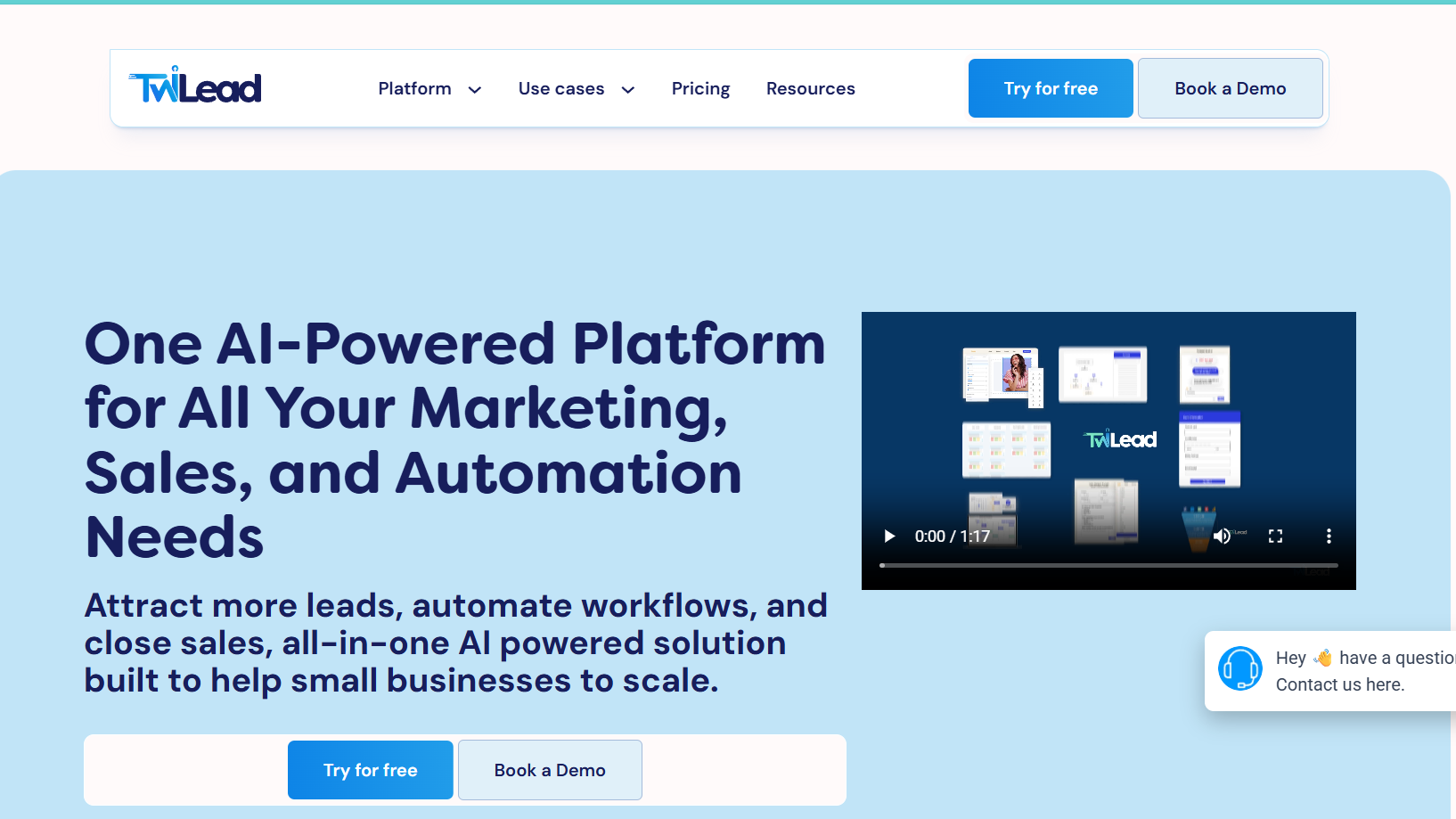
And that´s why TwiLead will be ypur best ally to transform your B2B marketing plan into reality.
TwiLead is an all‑in‑one sales and marketing automation platform designed to simplify and automate your marketing and sales actions. With TwiLead, you can:
- Automate Workflows: to collect more qualified leads and turn them into customers.
- Automate content posting: across your social channels to stay consistent without extra manual work.
- Create bulk email campaigns that nurture your audience and drive conversions.
- Use AI to power your actions, helping you work faster, smarter, and with greater impact.
- Track Performance: Monitor the success of your marketing action plan with TwiLead’s comprehensive reporting and analytics tools.
- Collaborate Seamlessly: Ensure seamless collaboration between marketing, sales, and customer service teams with TwiLead’s unified CRM platform.
By using TwiLead’s powerful features, you make your B2B marketing plan simpler, smoother, and way more effective.
It helps you save time on the repetitive stuff so you can focus on what actually moves the needle.
Whether you’re defining your goals, planning content, or keeping an eye on your performance, TwiLead gives you the tools—and the support—to grow with confidence in today’s competitive.
Conclusion
Developing a B2B marketing plan doesn’t have to feel overwhelming. It’s simply your roadmap to reach the right people, hit your business goals, and stay ahead in a competitive market.
By following the steps we’ve covered, you can build a plan that’s clear, actionable, and built for growth. And with the TwiLead help, you will transform that plan into actions that actually helps your business move forward, not just sit in a document.
Ready to automate your marketing efforts?
We make it possible with our AI-powered all-in-one CRM
References
[1] B2B Marketing: Step-By-Step Strategic Guide (2023) – Zen Media
[2] How to develop your B2B marketing action plan for 2023?
[3] 16 EDITION 2023 B2B marketing mix report – Sagefrog Marketing Group, LLC