If your pipeline looks busy but sales stay flat, you do not have a traffic problem. You have a lead generation vs conversion problem. Small businesses hit this wall all the time – more ads, more forms, more contacts, but not enough booked calls, signed contracts, or paid invoices.
The mistake is treating lead generation and conversion like the same job. They are connected, but they are not interchangeable. One fills the pipeline. The other turns that pipeline into revenue. If you overinvest in one and ignore the other, you create waste fast.
For a small business owner, this matters because time and software costs stack up quickly. You can spend all month chasing more leads, only to lose them because follow-up is slow, your process is messy, or your offers are unclear. You can also obsess over conversion rates while starving your business of new opportunities. Growth happens when both sides work together.
Lead generation vs conversion: the real difference
Lead generation is the process of attracting potential customers and getting them to raise their hand. That might happen through a website form, a social media campaign, a landing page, a free consultation offer, an online booking page, or a local ad.
Conversion happens after that moment of interest. It is the process of moving that lead to the next meaningful action. Depending on your business, that could mean scheduling an appointment, replying to a quote, signing a proposal, paying an invoice, or becoming a repeat customer.
Here is the blunt version. Lead generation creates attention. Conversion creates revenue.
A lot of small businesses chase top-of-funnel numbers because they are easy to see. More clicks feels like progress. More leads looks impressive in a report. But if those leads are unqualified, ignored, or poorly nurtured, the volume means very little.
On the other side, some businesses rely too heavily on referrals or repeat customers and neglect lead generation. That can work for a while, but it makes growth fragile. One slow month, one platform change, or one local competitor can throw off the whole system.
Which matters more for small business growth?
The honest answer is that it depends on your bottleneck.
If you are not getting enough inquiries, traffic, or booked calls, lead generation deserves more attention. If you are getting inquiries but struggling to close, then conversion is the bigger issue. The right move is not guessing. It is identifying where deals are dying.
A simple way to look at it is this. If 100 people visit your site and only 2 become leads, your lead generation system likely needs work. If 30 people become leads and only 1 buys despite a strong offer, your conversion system is probably leaking.
Most small businesses do not have just one problem. They have a chain problem. Their ads, website, inbox, calendar, and sales follow-up all live in separate tools. Leads come in, but response times are slow. Messages get missed. Contacts are not organized. Reminders do not go out. That is where the gap between lead generation and conversion gets expensive.
Why businesses often overspend on lead generation
Lead generation gets more attention because it feels active. Running ads, posting content, launching offers, and collecting form submissions looks like momentum. It also sells well because many platforms promise more leads as if that alone solves growth.
But more leads are only valuable if your business can handle them. If you are manually replying to every inquiry, forgetting follow-ups, or using five disconnected apps to move someone from interest to sale, then buying more traffic just adds pressure.
This is one of the biggest traps for smaller teams. They invest in acquisition before fixing process. Then they blame lead quality when the real issue is response speed, inconsistent nurturing, or friction in the buying journey.
For example, a coach might generate 50 consultation requests in a month. That sounds strong. But if half of those leads wait a day for a reply, another chunk never receives appointment reminders, and the rest get generic follow-up emails, the close rate drops for reasons that have nothing to do with demand.
Why conversion deserves more respect
Improving conversion is often the fastest path to better revenue because it makes your current demand work harder.
If you already have website traffic, social engagement, email subscribers, or incoming inquiries, then even a modest lift in conversion can produce meaningful results without raising ad spend. That matters when budgets are tight.
Conversion improvements usually come from fixing practical issues. Faster response times. Clearer offers. Better appointment scheduling. Consistent follow-up. Automated reminders. Simpler proposals. Cleaner handoff between marketing and sales.
None of that is glamorous, but it pays.
A local service business does not always need double the leads. It may need a better intake form, instant text confirmation, and an automated follow-up sequence that keeps the lead warm until the estimate is accepted. Small fixes in the middle of the funnel can outperform another round of ad spend.
Lead generation vs conversion in a real funnel
Think of your funnel in three stages.
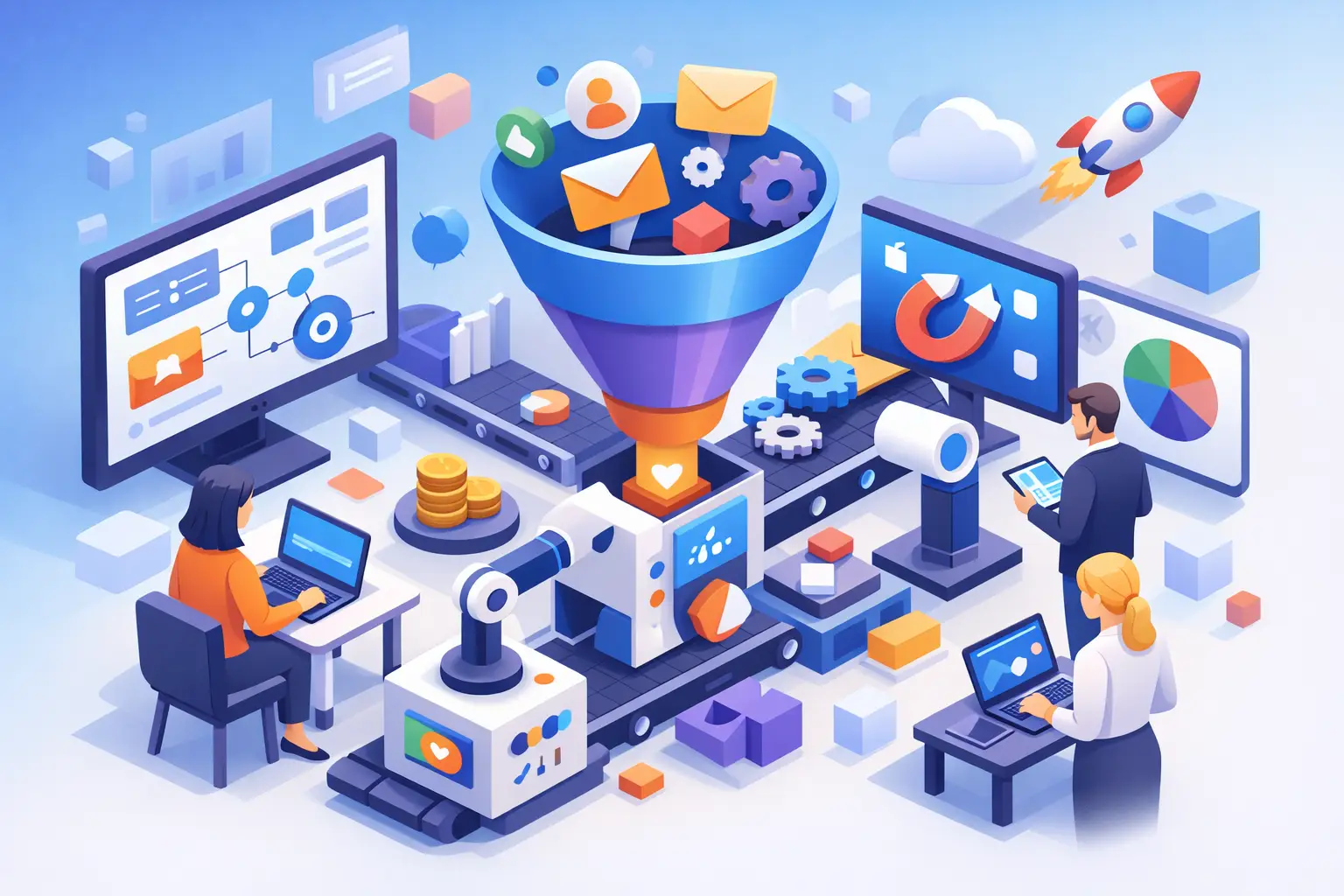
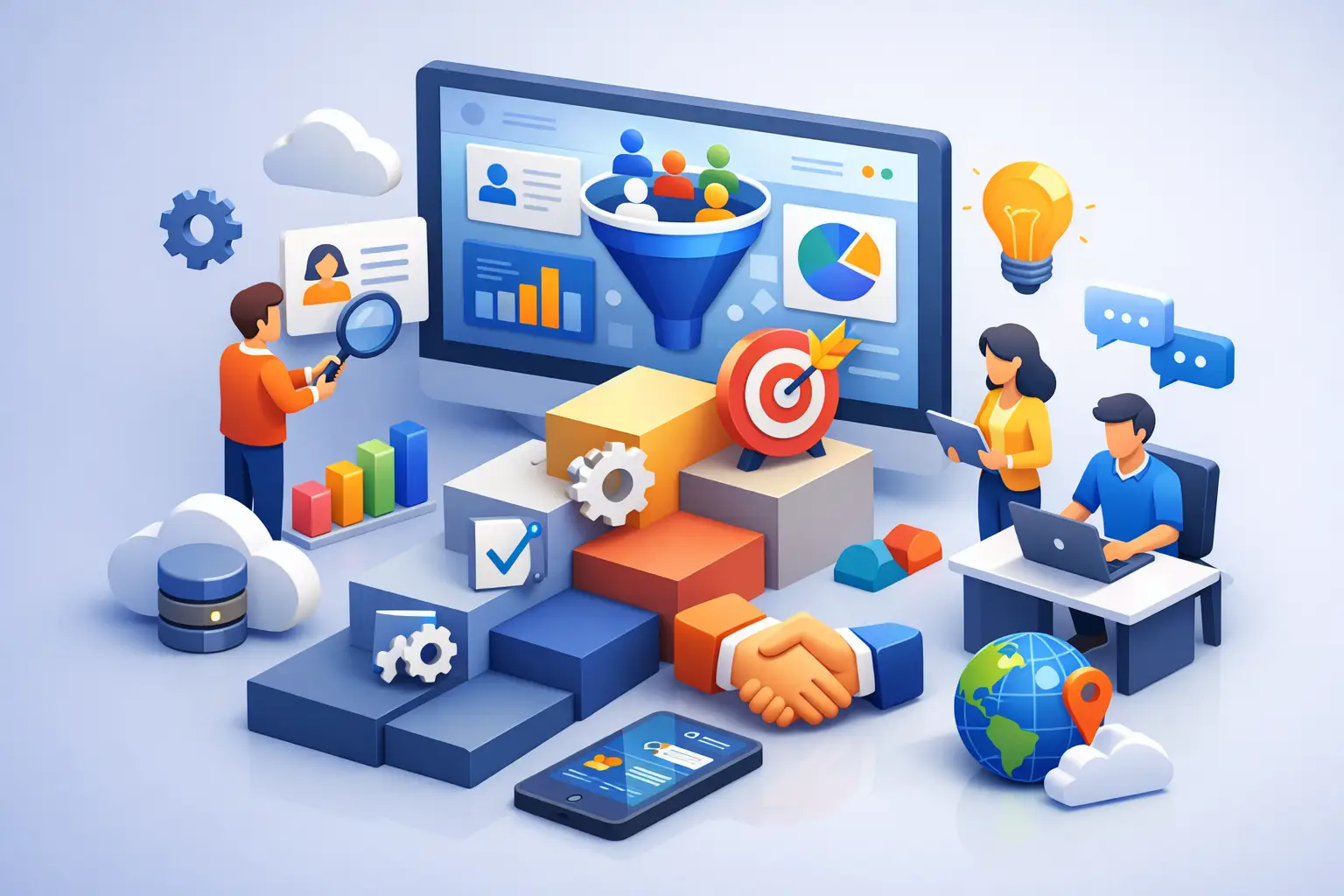
At the top, lead generation brings people in through ads, search, referrals, social media, landing pages, or booking tools. In the middle, nurturing keeps them engaged with emails, texts, reminders, and sales communication. At the bottom, conversion turns interest into action through calls, proposals, payments, or contracts.
If any stage is disconnected, performance drops.
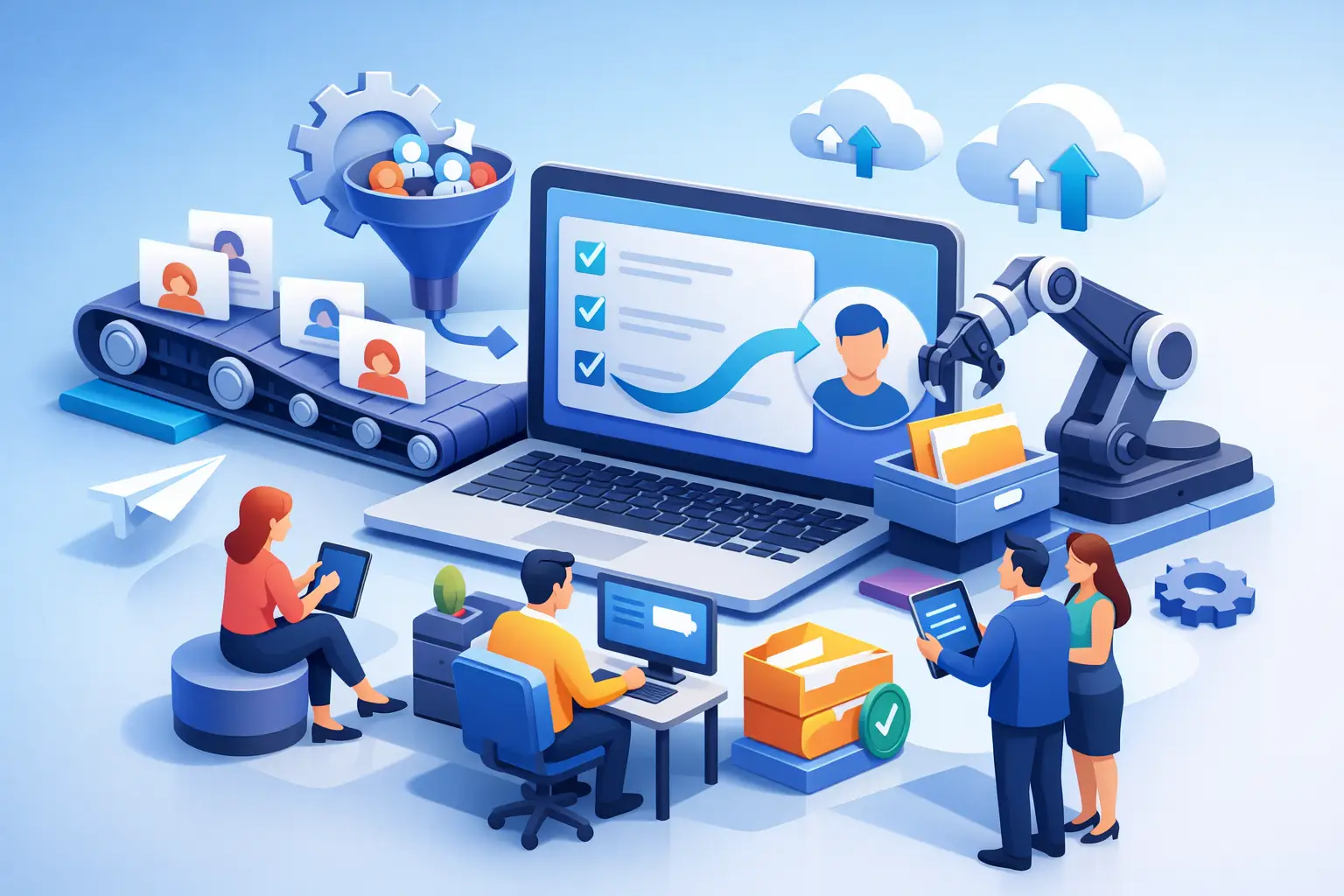
This is why tool overload hurts growth. One app captures leads. Another sends emails. Another handles bookings. Another stores customer notes. Another sends invoices. Every handoff creates delay and risk. For small business owners, fragmentation is not just annoying – it directly hurts conversion.
A connected system changes that. When lead capture, follow-up, appointments, conversations, and sales pipeline all live together, you reduce drop-off. You also get a clearer view of what is working and what is not.
How to decide where to focus first
Start with the numbers you already have. You do not need enterprise analytics to spot the issue.
Look at how many visitors become leads, how many leads book a call or appointment, how many appointments turn into proposals, and how many proposals close. That alone can tell you where the real drag sits.
If your visitor-to-lead rate is weak, work on lead generation assets like your offer, landing pages, calls to action, and traffic sources. If your lead-to-sale rate is weak, work on conversion assets like speed to lead, automated follow-up, sales messaging, scheduling, and pipeline visibility.
Do not ignore lead quality, either. More leads are not better if they are a bad fit. Strong lead generation attracts the right prospects. Strong conversion helps the right prospects move faster. Those two functions should support each other, not compete.
The smart play is balance, not volume
The best small businesses do not ask whether lead generation or conversion matters more in theory. They build a system where each supports the other.
That means your marketing should attract the right people with a clear promise. Your CRM should capture every inquiry automatically. Your follow-up should happen quickly without relying on memory. Your scheduling should remove friction. Your pipeline should show exactly where deals stall. Your communication should stay organized from first contact to payment.
That is also why all-in-one platforms make more sense for growing businesses than a patchwork stack. When everything is connected, you spend less time managing tools and more time moving prospects forward. For a business trying to grow without adding chaos, that is not a minor benefit. It is the difference between a busy funnel and a profitable one.
TwiLead is built around that reality. Instead of paying for separate systems to capture leads, send emails, manage conversations, book appointments, and track deals, small businesses can run the process in one place. That lowers software costs, cuts manual work, and gives lead generation and conversion a better chance to work as one system.
What good looks like
A healthy business does not brag about lead volume alone. It knows how many leads come in, how quickly they get contacted, how many book, how many buy, and what it costs to make that happen.
That level of control is what separates random marketing from repeatable growth. It also gives you better decision-making. You stop asking vague questions like, do we need more leads? Instead, you ask sharper ones. Are we attracting the right people? Are we following up fast enough? Are we making it easy to buy?
Those questions lead to revenue.
If you are deciding where to put your next dollar or next hour, do not default to more traffic just because it feels bigger. Check the leak first. Sometimes the smartest growth move is not adding more leads. It is finally converting the ones you already earned.