Most small businesses do not have a CRM problem. They have a stack problem.
One tool stores contacts. Another sends emails. Another books appointments. Another handles invoices. Then someone glues it all together with spreadsheets, copy-paste work, and a few automations that break at the worst possible time. That is why the idea of a complete CRM matters. If your system only tracks deals but cannot run the work around those deals, it is not complete. It is just one more tab.
What a complete CRM really means
A complete CRM is not simply a customer database with a sales pipeline attached. For a growing business, it is the system that captures demand, organizes customer data, drives follow-up, supports the team, and keeps revenue moving without forcing you to buy five more apps.
That definition matters because many platforms sell a narrow CRM and then charge extra for the parts you actually need. Email marketing becomes an add-on. Scheduling becomes another subscription. Automation is gated. Reporting gets limited. More users means a higher bill. Before long, your « CRM » is only the center of a much more expensive software mess.
For small businesses, complete means practical. Can your team capture leads from forms, ads, social channels, and phone calls? Can they automate responses, assign owners, schedule meetings, send proposals, collect payments, and keep every conversation in one place? If not, you do not have a complete system. You have a partial one.
The core parts of a complete CRM
At minimum, a complete CRM needs to bring sales, marketing, communication, and operations into the same working environment.
Sales comes first. Your team should be able to track contacts, companies, deals, pipeline stages, tasks, notes, and activity history without switching screens every few minutes. This sounds basic, but many businesses still work from disconnected tools where nobody sees the full customer story. When a rep cannot tell which email a lead opened, what form they submitted, or whether they already booked a call, follow-up slows down and deals slip.
Marketing has to live inside the same system. A CRM that cannot send campaigns, build landing pages, manage lead capture, score engagement, and trigger follow-up is pushing critical growth work somewhere else. That creates lag between interest and action. If a lead fills out a form at 10:03 and your team does not respond until 2:00 because data had to sync across tools, the issue is not discipline. It is system design.
Communication is another non-negotiable. A complete CRM should centralize email, SMS, calls, chat, and social conversations so the team sees every interaction in context. Customers do not think in channels. They think in outcomes. They want quick answers and consistent follow-up. If your business handles communication from separate inboxes and disconnected apps, the customer experience gets messy fast.
Then there is the operational layer. This is where many so-called CRMs fall apart. Small businesses need more than lead tracking. They need appointment booking, invoices, contracts, reminders, workflow automation, and post-sale follow-up. If your sales process ends in one platform but fulfillment, billing, and customer communication happen somewhere else, your team is doing extra work just to keep the business moving.
Why small businesses outgrow partial CRMs fast
A partial CRM can look good in a demo because it solves one visible pain point. Maybe it cleans up contact records. Maybe it gives the sales team a pipeline board. Maybe it sends decent email campaigns. But growth exposes the gaps.
As lead volume increases, manual work increases with it. Someone has to move data between systems, check whether tasks were completed, and make sure nothing got dropped during handoffs. Those are not high-value activities, but they consume real time every week. They also create inconsistent customer experiences, because results depend on whether each person remembered the next step.
Cost becomes the next problem. The low monthly price on a lightweight CRM rarely stays low once you add marketing, booking, automation, additional users, analytics, calling, and support. Many small businesses find themselves paying enterprise-style totals for a stack that still feels patched together.
There is also a leadership problem hidden inside fragmented systems. Sales managers and heads of growth need visibility. They want to know where leads came from, how quickly the team follows up, which campaigns produce appointments, where deals stall, and what actually drives revenue. When data is scattered across multiple tools, reporting becomes a guessing exercise. You get dashboards, but not clarity.
A complete CRM should reduce work, not relocate it
This is the simplest test. If adopting a CRM still leaves your team jumping between six tools to complete one customer journey, the platform is not solving complexity. It is relocating it.
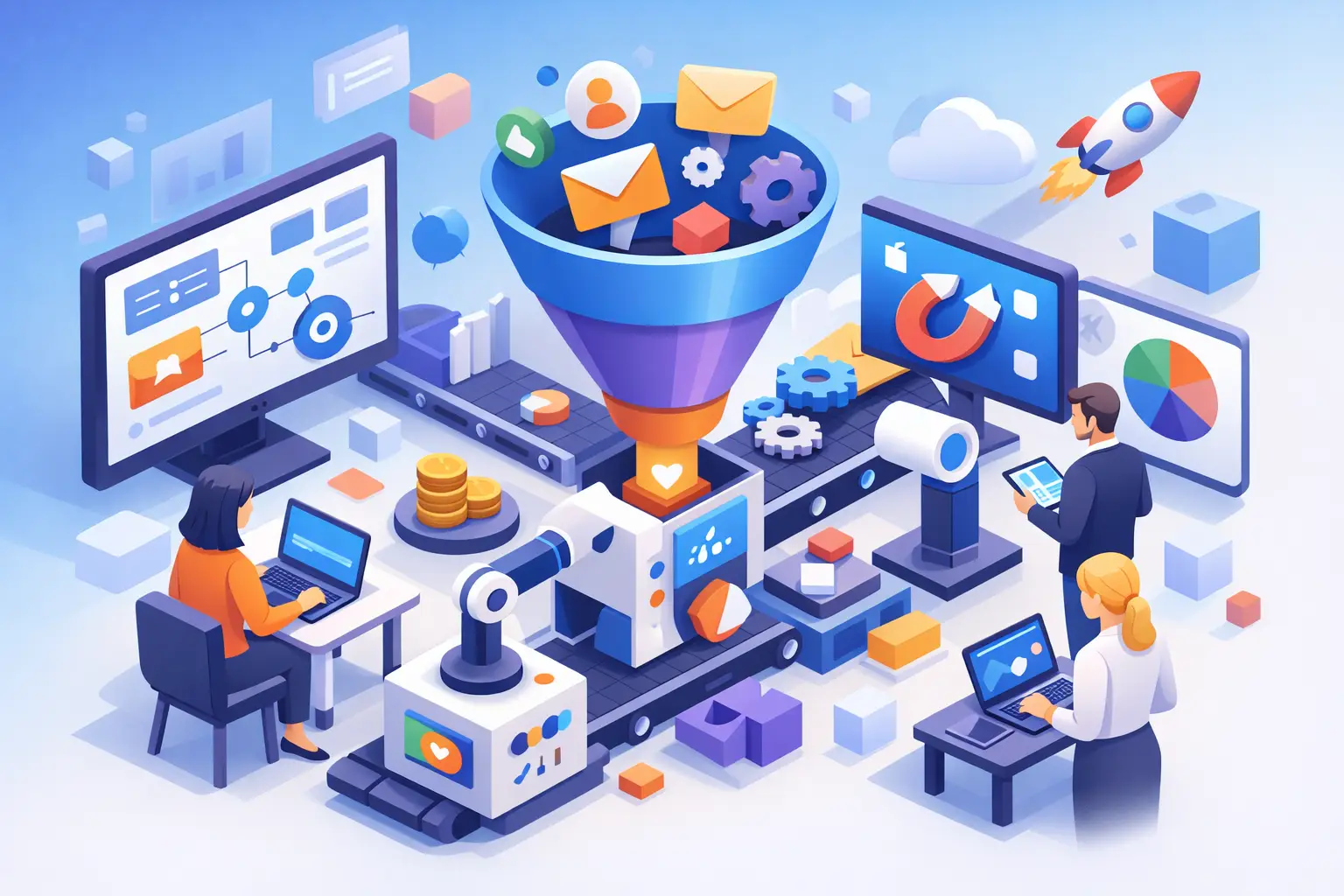
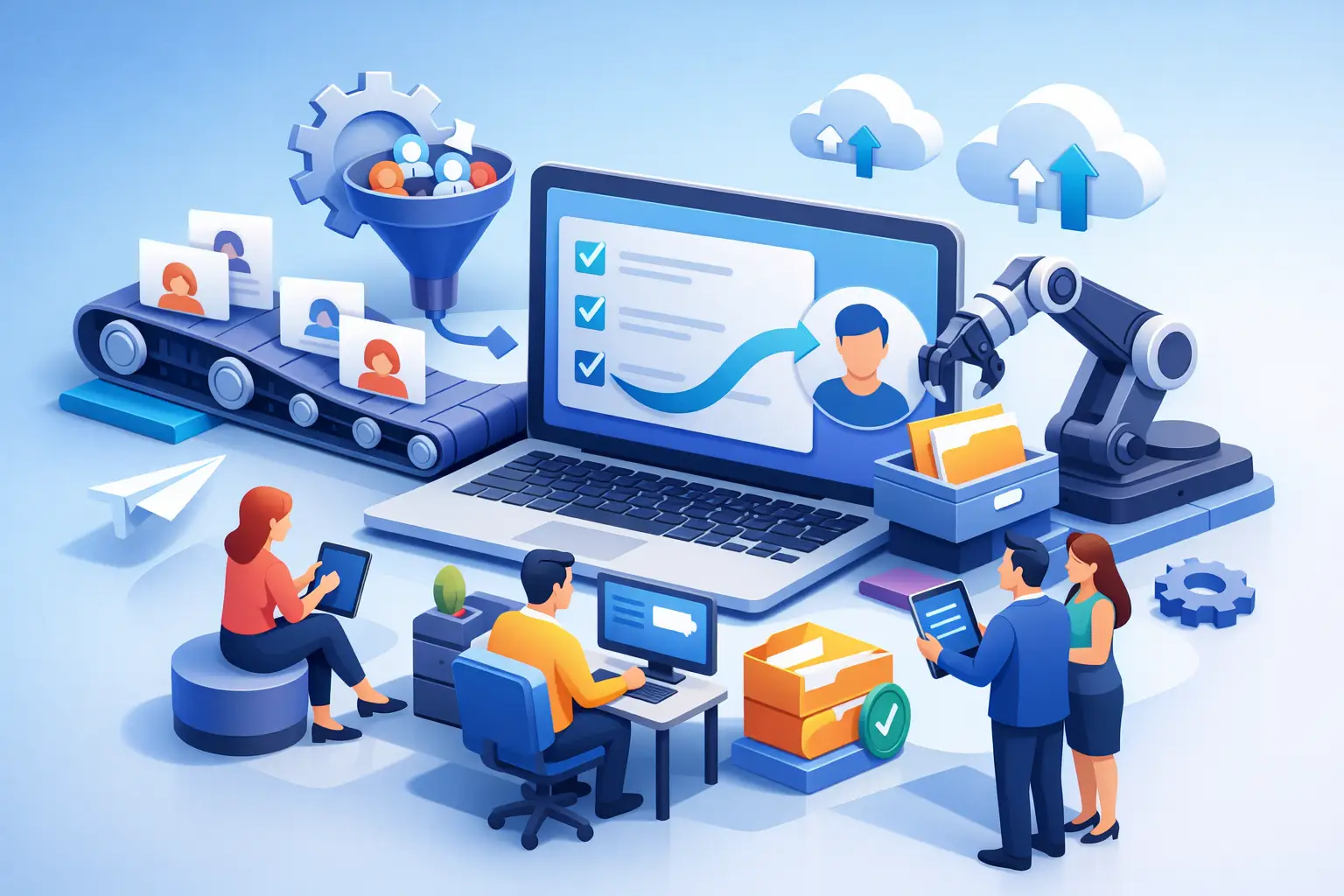
A stronger setup removes handoffs. A new lead enters through a form, ad, message, or booking page. The CRM creates the contact, assigns the owner, starts a workflow, sends a confirmation, alerts the team, and schedules the next action. If the lead replies, every conversation stays attached to the same record. If they book, the appointment is already linked. If they buy, invoices and contracts can follow from the same system.
That kind of flow changes the economics of growth. Your team spends less time managing software and more time closing business. Response times improve. Reporting gets cleaner. Training gets easier because new hires learn one environment instead of a patchwork. This is where a complete CRM stops being a software category and starts becoming an operating advantage.
What to watch for when vendors say complete CRM
The phrase sounds great, but it gets stretched. Some vendors call themselves complete because they cover sales plus one adjacent function. Others technically offer everything, but only through expensive upgrades, paid integrations, or separate products under the same brand.
Watch the pricing model closely. If each added user raises your cost, growth becomes a penalty. If key features are locked behind higher tiers, your team will hit ceilings right when momentum builds. If support is limited or slow, every configuration issue turns into downtime.
You should also look at setup reality. For a small business, a complete CRM should not require months of technical implementation to deliver value. Yes, any system needs structure and planning. But there is a big difference between thoughtful onboarding and enterprise-level complexity. The best platforms make advanced automation usable without demanding a full-time admin.
One more thing: complete does not mean bloated. Some businesses hear all-in-one and worry about clutter. That concern is fair. More features only help if they work together simply. The goal is not to buy the most buttons. The goal is to remove friction across marketing, sales, and customer management.
How to tell if your business needs a complete CRM now
You probably do if your team is losing time to duplicate data entry, paying for overlapping tools, or missing follow-ups because information lives in too many places. You also need one if marketing is generating leads faster than sales can process them, or if customer communication feels scattered across inboxes, calendars, and messaging apps.
For teams with 10 or more people, the pain compounds quickly. One person can improvise around messy systems. Ten people create process drift, inconsistent notes, conflicting follow-up, and reporting blind spots. A complete CRM gives everyone the same source of truth and the same operating rhythm.
Freelancers, consultants, and digital entrepreneurs feel the same issue on a smaller scale. They may not have departments, but they still juggle lead capture, nurture, booking, proposals, payments, and retention. When one person is both marketer and closer, tool overload hits even harder.
That is why platforms built around consolidation are gaining ground. For many small businesses, the winning move is not finding the best individual email app, scheduler, pipeline tool, and automation platform. It is replacing the stack with one system that actually covers the work. TwiLead is built around exactly that idea: one plan, one platform, unlimited access, and no upgrade pressure just to use the tools that should have been included from day one.
The real standard for a complete CRM
A complete CRM should help you generate leads, manage conversations, close deals, collect revenue, and automate routine work without making you assemble your own software ecosystem first. That is the standard. Not how many features appear on a pricing page, but how much of your business can run from one place with less effort and better visibility.
If your current CRM still needs three to seven side tools to feel usable, you already have your answer. The better question is not whether you need more software. It is whether you are finally ready for less of it.