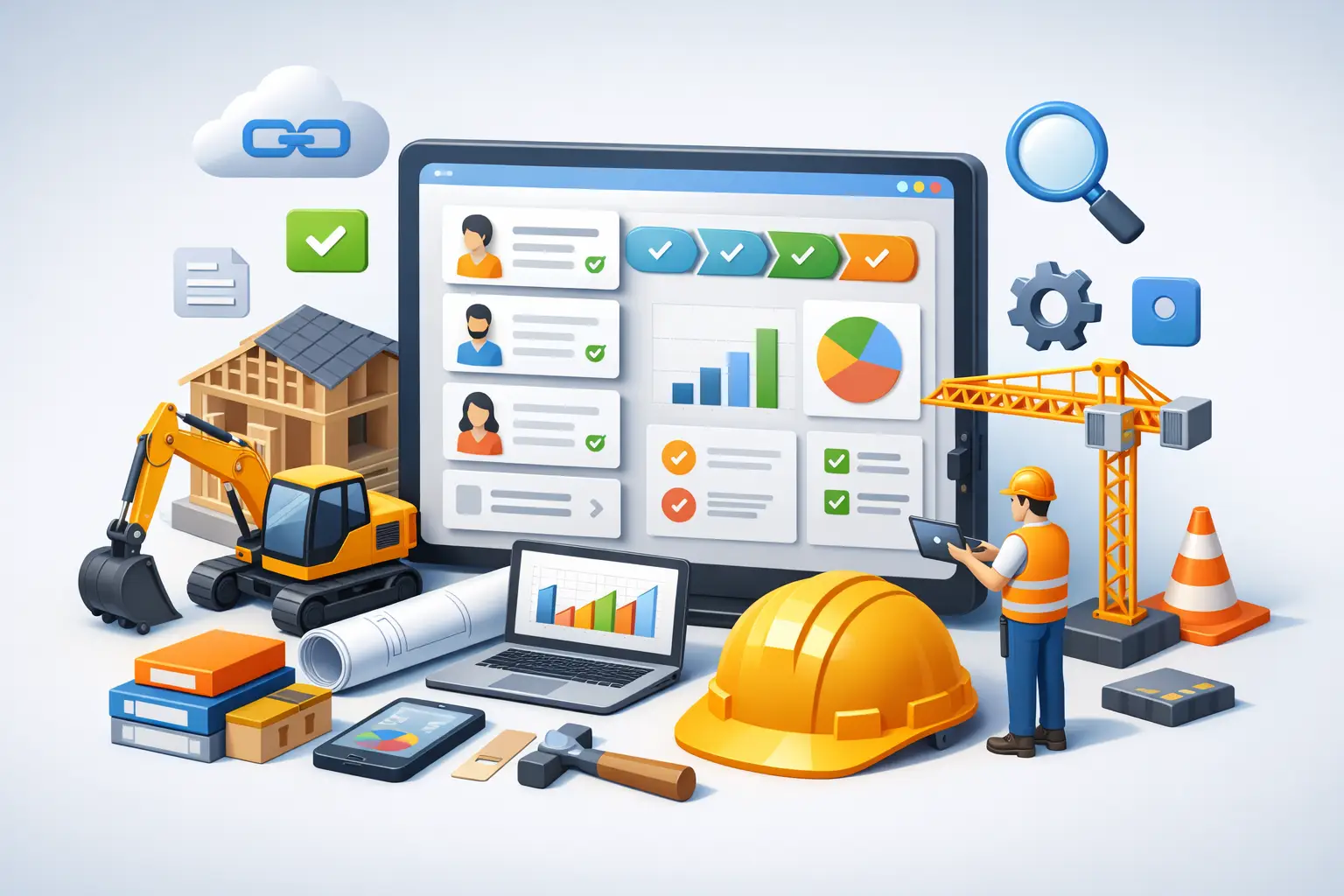
A missed callback can cost a contractor more than a slow week. One estimator forgets to follow up, one office manager loses track of a proposal, and one service request sits in a text thread nobody checks. That is usually when the search for the best CRM for small construction business teams starts – not because software sounds exciting, but because scattered systems start killing revenue.
Construction companies do not need another bloated platform built for enterprise sales teams with six layers of approvals. They need a system that helps them capture leads, organize jobs, track estimates, follow up fast, and keep communication moving without bouncing between five tools. If your team is juggling spreadsheets, inboxes, paper notes, and separate apps for scheduling, invoicing, and marketing, the real issue is not effort. It is fragmentation.
What the best CRM for small construction business teams actually needs
A good CRM in construction has to do more than store contacts. It should reflect how small contractors actually sell and operate. That means handling new inquiries, site visits, estimates, approvals, project communication, and repeat business in one place.
For most small construction businesses, the best setup starts with lead capture. Homeowners and commercial clients reach out through forms, calls, text messages, social media, and referrals. If those leads land in separate places, follow-up gets delayed. A CRM should centralize every inquiry and assign it to the right person fast.
The next piece is pipeline visibility. Construction sales are not a simple yes-or-no process. A job might move from new lead to site inspection, then estimate sent, then financing review, then signed proposal. If you cannot see where every opportunity stands, forecasting turns into guesswork.
Then there is communication. Clients want updates. Teams want context. The best systems keep emails, notes, call logs, and messages attached to the customer record so anyone can pick up the conversation without asking around.
Automation matters too, especially for small teams. If your office staff is manually sending reminders, chasing unsigned estimates, and confirming appointments all day, you are paying people to do what software should handle.
Why general CRMs often break down in construction
A lot of popular CRMs look impressive in demos and frustrating in real life. They are often built around long B2B sales cycles, not field-driven businesses with urgent estimates, job scheduling, and constant customer communication.
The first problem is complexity. Many platforms assume you have a dedicated admin, an onboarding budget, and time for a custom setup. Small construction businesses usually have none of that. They need something their team can start using quickly.
The second problem is tool sprawl. A CRM might handle contacts well, but then you still need separate tools for email campaigns, booking, proposals, invoices, forms, automation, and reporting. That low monthly price stops looking affordable once you stack on four or five more subscriptions.
The third problem is poor alignment with how contractors win work. Construction businesses rely heavily on fast responses, local reputation, repeat customers, and steady follow-up. If the CRM does not help you respond faster and stay organized, it becomes another system your team avoids.
How to evaluate the best CRM for small construction business growth
Start with the sales process, not the software brand. Map how a lead becomes a signed job in your company. Look at where leads come from, who follows up, how estimates are delivered, and where deals get stuck. The right CRM should remove friction at each step.
A useful test is simple: can your team manage the full customer journey without jumping between disconnected systems? If the answer is no, you are not buying efficiency. You are buying another tab.
Look closely at these areas.
Lead capture and response time
Construction is competitive, and speed matters. The CRM should pull in website forms, missed calls, texts, and appointment requests into one inbox or dashboard. If leads are sitting in separate apps, your response time drops and your close rate usually follows.
Pipeline customization
Your stages should match your business. A remodeler, roofer, HVAC installer, and general contractor all move jobs differently. The CRM should let you build stages around your workflow instead of forcing you into a generic sales template.
Estimates, proposals, and approvals
Not every CRM includes quoting or proposal tools, and that gap creates extra admin. If your team sends estimates from one system and tracks deals in another, mistakes happen. The closer those functions are tied together, the easier it is to move jobs forward.
Scheduling and reminders
Site visits, consultations, and follow-ups need built-in scheduling. Bonus points if the system automatically sends reminders to reduce no-shows and cuts the back-and-forth on booking.
Communication history
You should be able to open one record and see every interaction. Calls, texts, emails, notes, invoices, and task history should live together. That saves time and prevents embarrassing gaps when a client calls and nobody knows what happened last.
Automation and marketing
Small construction businesses often underuse their existing customer base. A CRM with built-in email and text automation can help you follow up on unsold estimates, request reviews, promote seasonal services, and reactivate old leads without manual effort.
All-in-one vs point solutions
This is where a lot of owners make the expensive mistake. They buy a CRM, then realize it does not handle scheduling. So they add a calendar app. Then they need email marketing, invoices, automation, website forms, and maybe social posting. Now the stack is bigger than the problem they were trying to solve.
Point solutions can work if you have a very specific workflow and someone to manage integrations. But for most small construction teams, all-in-one software is the better play. Fewer subscriptions. Fewer sync issues. Less training. More actual use.
That does not mean every all-in-one platform is automatically the best CRM for small construction business operators. Some promise everything and deliver a cluttered mess. The right one should still feel simple day to day.
Cost matters more than the sticker price
A CRM that costs less upfront can cost more over time if key features sit behind upgrades, user limits, or add-ons. Construction businesses with office staff, sales reps, and field managers need multiple people in the system. If pricing jumps every time you add users, growth gets punished.
You also need to count the hidden cost of manual work. If your staff spends hours every week copying lead data, sending reminders, building reports, or checking multiple inboxes, that is real labor cost. Cheap software that creates admin is not cheap.
This is why platforms that combine CRM, communication, scheduling, automation, marketing, and operational tools into one fixed-price plan are getting more attention. For a small business trying to scale without adding software chaos, consolidation is often the real savings. That is part of why solutions like TwiLead stand out for teams that want one system instead of a pile of subscriptions.
Signs you found the right fit
The best CRM should make your business feel more controlled within the first few weeks. Leads should stop slipping through cracks. Follow-up should happen faster. Your team should spend less time asking for updates and more time moving work forward.
You should also notice cleaner handoffs. Sales knows what operations needs. Office staff can see where jobs stand. Management can spot bottlenecks without chasing people for status reports.
If adoption is low, that is usually a warning sign. A CRM only works if people actually use it. For small construction companies, the winning platform is usually not the one with the longest feature list. It is the one that makes daily work easier.
The smartest buying question to ask
Instead of asking, what is the most powerful CRM, ask this: which system helps my team win more jobs with less admin?
That question shifts the focus from brand names and flashy demos to actual business outcomes. Can it capture every lead? Can it automate follow-up? Can it organize communication? Can it support growth without adding more software and more monthly bills?
For small construction businesses, the answer usually points toward a practical, all-in-one CRM that is easy to run, affordable to keep, and strong enough to support both sales and operations. Not enterprise theater. Not another patchwork stack. Just one system that helps you respond faster, stay organized, and close more work.
Software should not feel like another job site problem. It should feel like finally getting your tools where they belong.