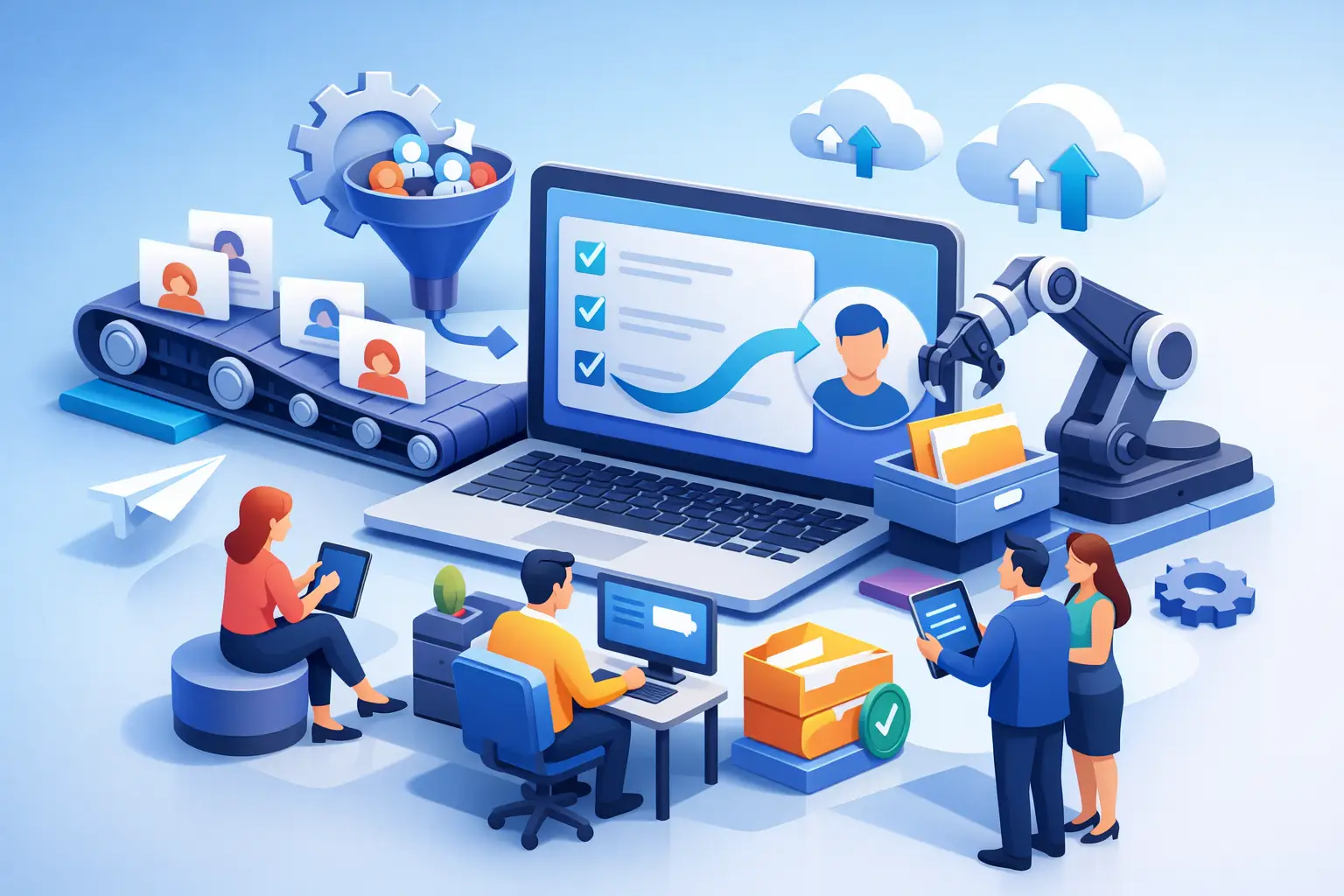
A lot of small businesses do not have a lead problem. They have a follow-up problem.
That is why understanding what is sales pipeline management matters so much. It is the process of tracking every sales opportunity from first contact to closed deal, using clear stages so nothing slips through the cracks. If your leads live in email, your notes sit in a spreadsheet, and your reminders depend on memory, your pipeline is already costing you money.
What is sales pipeline management?
Sales pipeline management is the way a business organizes, tracks, and improves its sales process from lead capture to conversion. It gives you a visual system for seeing where each prospect stands, what needs to happen next, and where deals are getting stuck.
Think of it as the control center for revenue, not just a sales chart. A healthy pipeline shows whether new leads are coming in consistently, whether follow-up is happening on time, and whether your team is moving real opportunities toward a decision. For a small business owner, that matters because sales usually break down in the gaps between tasks. Someone forgets to call back. A quote gets sent late. A hot lead books with a competitor because no one replied quickly enough.
Pipeline management fixes that by turning sales into a repeatable process instead of a series of one-off conversations.
Why small businesses need it more than they think
A lot of owners assume pipeline management is for big sales teams running enterprise software. That is backwards. Small businesses need it even more because they have less margin for mistakes, less time for admin, and fewer people covering follow-up.
If you are a consultant, coach, local service business, agency, or training center, your sales cycle may feel simple. But simple does not mean automatic. Even a short cycle usually includes a lead inquiry, qualification, meeting, proposal, follow-up, and close. Without a system, those steps become inconsistent fast.
That inconsistency creates three expensive problems. First, you lose visibility. You do not know how many deals are active or which ones are likely to close. Second, you lose speed. Every next step has to be remembered manually. Third, you lose revenue. Leads go cold while you are busy doing client work.
Good pipeline management gives you structure without adding complexity. That is the key. You do not need more software chaos. You need one place to see leads, conversations, tasks, and deal stages together.
How a sales pipeline actually works
A sales pipeline is made up of stages that reflect how buyers move toward a purchase. The exact stages depend on your business model, but the logic stays the same. A lead enters the system, gets qualified, receives some kind of offer or consultation, then moves toward either a win or a loss.
A typical small business pipeline might include new lead, contacted, qualified, appointment scheduled, proposal sent, follow-up, and closed won or closed lost. If you sell lower-ticket services, the middle stages may be shorter. If you sell high-ticket packages or recurring contracts, you may need more detail.
The goal is not to create ten complicated stages just to feel organized. The goal is to reflect reality clearly enough that your team knows what each stage means and what action should happen next.
That last part matters. A pipeline stage should never be just a label. It should trigger behavior. If a deal moves to proposal sent, maybe that means an automatic reminder goes out in two days. If it moves to appointment scheduled, maybe a confirmation email and calendar invite fire instantly. This is where pipeline management stops being a passive dashboard and starts becoming a growth system.
What good sales pipeline management includes
At a minimum, good pipeline management gives you visibility, accountability, and momentum.
Visibility means you can open one dashboard and instantly see how many opportunities are active, where they sit, and what they are worth. Accountability means every deal has a next step, owner, and timeline attached to it. Momentum means the system helps move deals forward with reminders, automations, and communication history in one place.
The strongest setup usually includes contact records, deal stages, task tracking, notes, email or text history, appointment scheduling, and reporting. For small businesses, that combination is far more useful than a standalone pipeline board that looks nice but forces you to jump between five other tools.
This is where many businesses get stuck. They buy separate apps for CRM, email marketing, calendars, forms, proposals, and automation. Then they wonder why follow-up still feels messy. Fragmented tools create fragmented sales execution.
Common pipeline mistakes that slow down growth
The biggest mistake is treating the pipeline like a static list instead of a live operating system. If deals are not updated regularly, the pipeline becomes fiction. That leads to false forecasts, missed follow-ups, and bad decisions.
Another common mistake is having stages that are too vague. If one stage is called interested, what does that actually mean? Did they reply? Book a call? Request pricing? If your stages are fuzzy, your process will be too.
Some businesses also overbuild their pipeline. More stages do not equal more control. Usually they create more admin and less action. A lean pipeline with clear definitions beats a bloated one every time.
Then there is the follow-up gap. Many deals do not die because the prospect said no. They die because nobody followed up at the right time. That is why reminders and automation matter so much. Manual follow-up works when you have five leads. It breaks when you have fifty.
How to manage a sales pipeline better
Start by defining the real path your customers take before buying. Not the ideal version – the actual one. Look at recent wins and identify the key steps between inquiry and close. Those become your core stages.
Next, assign criteria to each stage. A lead should only move forward when something specific happens. That keeps your pipeline accurate and makes reporting useful.
Then build next actions into the process. Every open deal should have a scheduled task, message, or appointment attached to it. If there is no next step, the deal is drifting.
After that, automate the repetitive parts. This could include lead assignment, appointment reminders, post-meeting follow-ups, proposal nudges, and reactivation messages for cold leads. Automation is not about removing the human element. It is about making sure basic follow-up happens even when your day gets packed.
Finally, review the pipeline consistently. You do not need enterprise-level sales meetings. But you do need a rhythm. Weekly is enough for most small businesses. Look for stalled deals, conversion rates between stages, average time to close, and where prospects are dropping off.
What is sales pipeline management without a CRM?
Usually, it is a patchwork.
You can manage a pipeline with spreadsheets for a while. Plenty of businesses start there. But once lead volume increases, spreadsheets become hard to trust and harder to maintain. Notes get lost, follow-ups are missed, and nobody has a complete picture of the customer.
A CRM turns pipeline management into something usable day to day. It stores contact information, tracks conversations, logs activity, and keeps the sales process connected to marketing and service workflows. That connection matters. Sales does not happen in isolation. A lead might come from a form, an ad, a social message, a booking page, or an email campaign. If those systems do not talk to each other, your pipeline will always be slower than it should be.
That is why many small businesses are moving away from stacked tools and toward all-in-one platforms. TwiLead, for example, brings pipeline tracking, CRM, automation, communication, scheduling, and marketing into one place. That means fewer subscriptions, less manual syncing, and a much easier path from lead capture to closed deal.
The real payoff
The biggest benefit of sales pipeline management is not better organization. It is better conversion.
When you know where every deal stands, follow-up gets faster. When stages are clear, forecasting gets smarter. When automation handles repetitive tasks, your team spends more time selling and less time chasing admin. And when your entire customer journey lives in one system, growth stops feeling chaotic.
That does not mean every business needs the same pipeline. A local contractor, a business coach, and an online training company will each need different stages and timing. But they all need the same foundation: visibility, consistency, and a process that does not depend on memory.
If your sales process still lives across inboxes, sticky notes, and disconnected apps, that is not just inconvenient. It is expensive. The sooner you manage the pipeline like a real system, the sooner your business stops leaking deals you already worked hard to earn.
The best pipeline is not the most advanced one. It is the one your business actually uses every day to move leads forward.