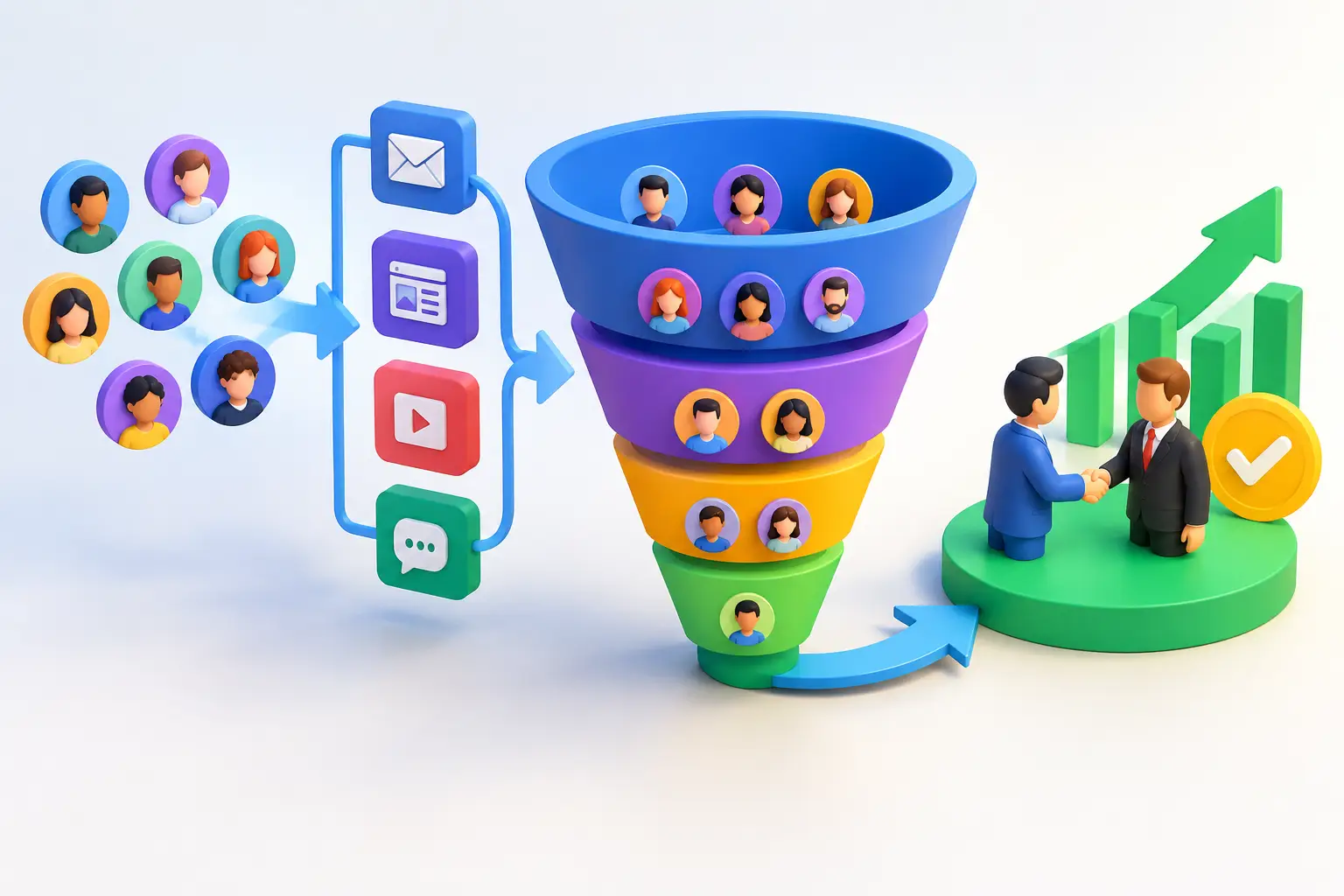
A new lead is most interested when they first reach out, but most small businesses are too busy to respond perfectly every time. That is where lead nurturing campaign examples become useful. They show how to stay helpful and visible after the first inquiry, so prospects move toward a decision instead of forgetting why they contacted you.
Nurturing is not about sending more emails for the sake of it. It is about delivering the next useful message based on what a prospect needs, how ready they are to buy, and what action they have or have not taken. A good campaign makes follow-up feel organized to you and personal to the customer.
What a Lead Nurturing Campaign Should Do
A campaign should remove friction between interest and purchase. For a local service business, that may mean getting a homeowner to book an estimate. For a coach, it may mean turning a guide download into a discovery call. For an agency, it may mean helping a prospect understand the cost of delaying a marketing decision.
Before building anything, define one clear conversion goal. Do you want a booked appointment, a reply, a proposal review, or an online purchase? When every message points to a different action, prospects get confused and performance drops.
The strongest campaigns also use more than one channel when it makes sense. Email is useful for education and detail. Text messages are better for time-sensitive reminders. A CRM task can prompt a personal call when a lead shows serious buying intent. The goal is not to use every channel. The goal is to follow up quickly and consistently without creating extra manual work.
7 Lead Nurturing Campaign Examples for Small Businesses
1. The New Inquiry Speed-to-Contact Campaign
This campaign starts the moment someone submits a contact form, sends a website chat message, or requests pricing. Its purpose is simple: acknowledge the inquiry immediately and make the next step easy.
Send an instant email that confirms you received their request, sets expectations for a response, and includes a direct appointment link if a call is appropriate. If the lead shared a mobile number and opted in, follow with a short text message a few minutes later: “Thanks for reaching out. Would you like to choose a time for a quick call?”
Then create a task for a team member to call within the same business day. If the prospect does not book or respond, send a helpful follow-up the next day that answers a common question, such as pricing ranges, service areas, or what happens during an estimate.
Speed matters here. A generic “we will be in touch” message is better than silence, but it does not move the conversation forward. Give the lead one clear action to take while their interest is fresh.
2. The Missed Call Rescue Campaign
A missed phone call is often a lead that contacted the business at the exact moment they were ready to act. Waiting until the end of the day to return it can cost the opportunity.
Set up an automatic text message to go out within a minute of a missed call: “Sorry we missed you. How can we help? Reply here, or book a time that works for you.” Follow it with an email that repeats the booking option and answers the most common first question prospects ask.
If there is no response, send one more message the following day. Keep it human and direct: “Just checking whether you still need help with [service]. We have openings this week.” After that, move the lead into a longer-term campaign rather than repeatedly chasing them.
This is especially effective for plumbers, home service providers, real estate teams, salons, and other businesses where customers are contacting several providers quickly. The first business to respond clearly often wins.
3. The Educational Campaign for Longer Sales Cycles
Some offers need more trust before a prospect will book. A business consultant, marketing agency, financial professional, or high-ticket home remodeler may need to answer several questions before a lead is ready to talk.
Build a short sequence of three to five emails around the decision, not around your company. The first message identifies the problem and its cost. The second explains how to evaluate options. The third shares a real-world scenario or customer result. The last message invites the prospect to book a consultation.
For example, an agency could send a sequence about why leads go cold, how fast follow-up affects conversion, and what a simple lead system should include. Each email should stand on its own. A prospect may only read one, so do not make the value depend on reading every prior message.
The trade-off is timing. Sending the series too quickly can feel pushy. Sending it too slowly loses momentum. For most service businesses, spacing messages two to four days apart is a sensible starting point, then adjust based on responses and bookings.
4. The Appointment Reminder and No-Show Campaign
A booked appointment is progress, not revenue. If people do not show up, your calendar looks full while your sales pipeline stays empty.
Send a confirmation immediately after booking with the date, time, location or meeting link, and a simple explanation of what to expect. Send another reminder 24 hours before the appointment and a final text reminder one or two hours before it begins. Make rescheduling easy, because a rescheduled appointment is far better than a silent no-show.
When someone misses the meeting, avoid treating them like a lost cause. Send a message within 15 minutes: “We missed you today. Would you like to choose another time?” The next day, send a brief follow-up that reinforces the value of the conversation.
This campaign protects time, improves customer experience, and gives sales conversations a better chance to happen. It also reveals where your process needs work. If no-shows remain high, review whether people understand the value of the appointment before they book it.
5. The Estimate or Proposal Follow-Up Campaign
Many deals do not disappear because the prospect said no. They disappear because nobody follows up after sending an estimate. Owners assume the customer is not interested, while the customer is comparing options, waiting for a spouse, or simply distracted.
Start with a same-day email that recaps the proposed solution, the outcome it delivers, and the next step to approve or discuss changes. Two days later, send a short check-in. A few days after that, address one common concern, such as timing, budget, scope, or return on investment.
Do not use fake urgency. If a deadline or limited schedule is real, say so clearly. If not, focus on helping the prospect make a confident decision. For higher-value proposals, add a personal call task after the second follow-up. Automation should make personal outreach more timely, not replace it when the deal deserves a conversation.
6. The Dormant Lead Re-Engagement Campaign
Your CRM probably contains people who asked for information months ago but never made a purchase. These are not automatically bad leads. Their timing may have changed.
A re-engagement campaign should feel like a fresh reason to reconnect, not a guilt trip. Start with a direct message such as, “Are you still looking for help with [problem]?” Then offer something relevant: seasonal availability, a new service, a quick assessment, or a useful checklist.
Keep the sequence short, usually two or three messages over a couple of weeks. Include an easy way to say no or pause communication. That protects your sender reputation and keeps your list focused on people who may genuinely want to hear from you.
For seasonal businesses, this campaign can be a reliable source of lower-cost revenue. A landscaping company can reconnect before spring. A real estate professional can reach out before the local buying season. A coach can invite past inquiries into a new program cycle.
7. The New Customer Onboarding and Referral Campaign
Lead nurturing does not stop at the sale. A strong onboarding campaign reduces buyer’s remorse, helps customers get results faster, and creates the conditions for referrals and repeat business.
Immediately after purchase, send a welcome message that confirms what happens next. Then send practical updates that answer questions before customers need to ask them. A service business might explain preparation steps and arrival expectations. A consultant might share a simple intake form and meeting schedule.
After the customer has received clear value, ask for a review or referral. Timing matters. Do not ask on day one. Ask after a milestone, a completed project, or a visible result. Make the request specific and easy: “If you know someone who needs help with this, would you feel comfortable introducing us?”
Build Campaigns Around Behavior, Not Guesswork
The most effective campaigns respond to what leads actually do. Someone who downloads a guide needs different follow-up than someone who visits your pricing page twice. A prospect who books a call needs reminders, not more introductory emails. A customer who buys needs onboarding, not sales promotions.
Start simple. Build one campaign around the biggest leak in your process, whether that is slow inquiry response, missed appointments, or unapproved estimates. Measure booked calls, show rates, proposal acceptance, and revenue, not just opens and clicks.
A single platform such as TwiLead can keep lead capture, customer conversations, appointment scheduling, pipeline stages, and follow-up automation in one place. That matters because disconnected tools often create gaps where leads get missed, messages get duplicated, and owners lose visibility into what is working.
The right campaign is the one your business can run consistently. Make the next step obvious, follow up while interest is high, and give every qualified lead a real chance to become a customer.