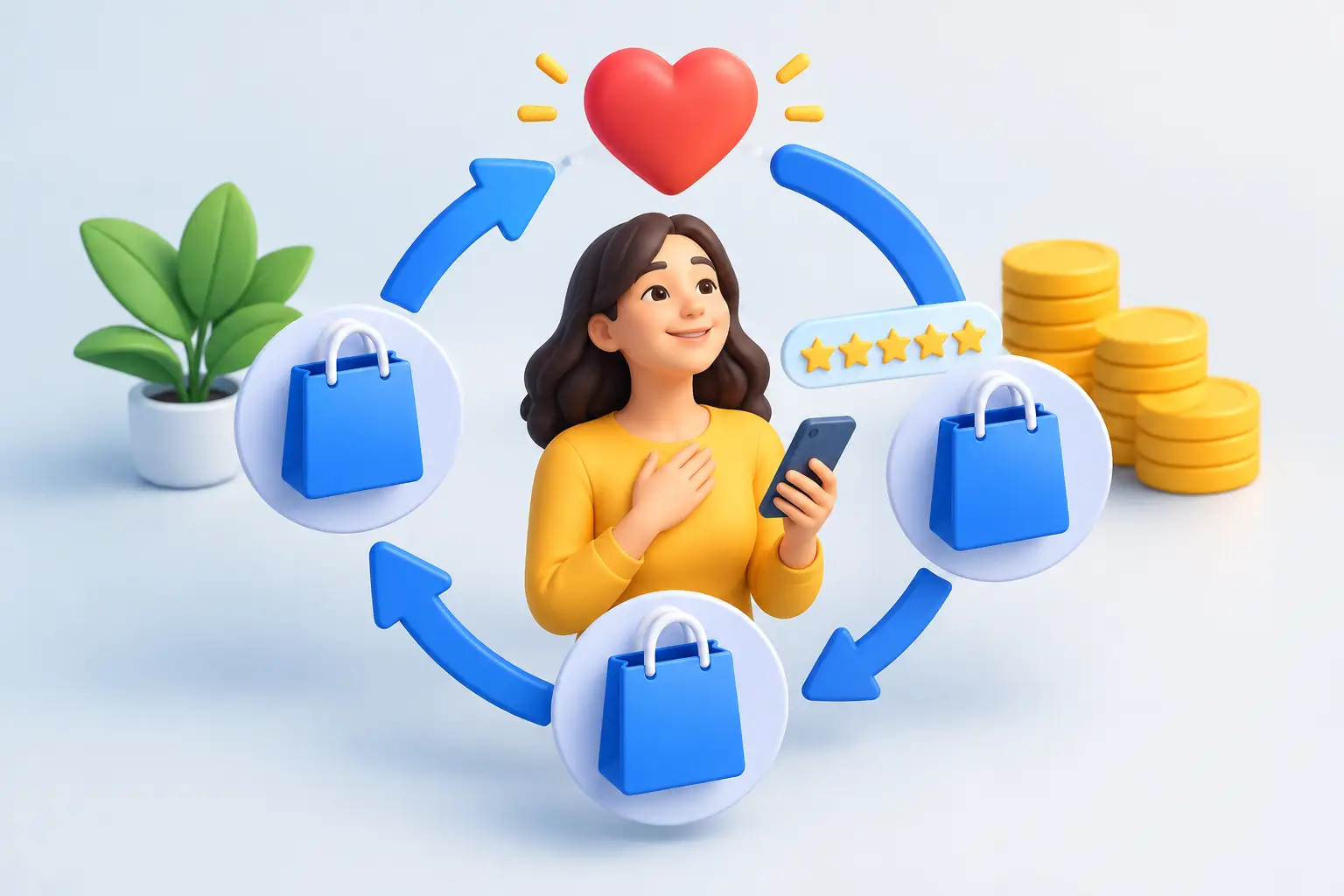
A customer who buys once is a sale. A customer who comes back, refers a friend, and chooses you when a competitor offers a discount is an asset. That is what customer loyalty creates for a small business: steadier revenue, lower marketing costs, and fewer painful months spent chasing every new lead from scratch.
The catch is that loyalty is not built by handing out points or sending a generic “thank you” email after a purchase. It is earned in the small moments that customers remember: how quickly you respond, whether you keep your word, how easy it is to book again, and whether your follow-up feels useful instead of pushy.
For a local service business, agency, coach, consultant, or real estate professional, the goal is simple. Build a customer experience that makes returning the obvious choice.
Why customer loyalty matters more than another lead
New leads are essential, but they are often expensive and unpredictable. You may pay for ads, spend hours creating content, network locally, or rely on referrals that arrive in waves. When customers return, your business has a more dependable base to build from.
Loyal customers usually buy more easily because they already understand your value. They are also more likely to accept a new offer, book a recurring service, leave a review, or recommend you to someone who needs exactly what you provide. Their trust reduces the time and effort required to close the next sale.
This does not mean retention should replace lead generation. A business with no pipeline cannot grow. But focusing only on acquisition creates a leaky bucket: you work hard to bring people in, then lose them through slow replies, forgotten follow-ups, and inconsistent service. The strongest growth plan does both. It generates leads while giving existing customers a clear reason to stay.
What customers actually stay loyal to
Price matters, especially when budgets are tight. But price alone rarely creates loyalty. A competitor can always run a promotion. Small businesses win loyalty by being easier and better to work with.
Customers remember reliability. If you say you will call Tuesday, call Tuesday. If an appointment is confirmed, show up prepared. If a problem happens, address it directly rather than hiding behind a delayed response. Reliability sounds basic, but it is a major competitive advantage in service businesses where customers are used to being ignored or bounced between people.
They also value recognition. A repeat customer should not have to explain their history every time they contact you. Knowing what they bought, what they asked for, and where they are in the relationship shows that your business pays attention.
Finally, customers stay when the next step is easy. If rebooking requires a phone tag, a long form, or searching through old emails, some customers will put it off. If it takes two taps from a reminder, they are far more likely to act.
Build a loyalty system, not a collection of good intentions
Great service can be ruined by an unreliable process. A busy owner may genuinely want to check in after a job, ask for feedback, and invite customers back at the right time. But once the calendar fills up, those tasks are often the first to disappear.
A simple loyalty system prevents that. It should track customer conversations, purchases, appointments, open opportunities, and follow-up tasks in one place. The point is not to add another dashboard to manage. The point is to make sure valuable customers do not slip through the cracks.
Start by mapping the few moments that shape whether customers return:
- The first response after an inquiry
- The booking or buying process
- The service or delivery experience
- The follow-up after the sale
- The reminder or offer that brings them back
For each moment, decide what should happen every time. A new inquiry may receive an immediate confirmation and a personal response within business hours. A completed appointment may trigger a thank-you message the same day. A customer due for recurring service may receive a reminder before they have to remember on their own.
Consistency matters more than elaborate campaigns. One relevant message at the right time will outperform a monthly blast that treats every customer the same.
Make follow-up fast and specific
Slow follow-up costs sales and retention. After someone fills out a form, requests a quote, or sends a message, they are actively looking for a solution. A prompt reply communicates that their business matters.
The same is true after a purchase. Do not stop communicating the moment payment is complete. Send a short message that confirms what happens next, gives the customer a way to ask questions, and makes them feel confident they made the right choice.
Specificity makes a major difference. “Thanks for your business” is polite but forgettable. “Your landscaping visit is scheduled for Thursday at 10 a.m. Reply here if you want us to focus on the front beds” is helpful. It removes uncertainty and starts a two-way conversation.
Use automation to protect the personal touch
Many owners hear “automation” and picture cold, generic messages. Used poorly, that can happen. Used well, automation handles the predictable work so you have more time for the conversations that need a real person.
Automate confirmations, appointment reminders, missed-call text responses, review requests, nurture messages, and recurring-service reminders. These are repeatable actions that should not depend on you remembering them during a hectic day.
Keep human judgment where it counts. A frustrated customer, a high-value proposal, a complicated service issue, or a personal referral deserves an individual response. Automation should make your business more responsive, not make customers feel like they are talking to a machine.
For example, an HVAC company can automatically remind a customer when seasonal maintenance is due, then have a team member personally follow up if the customer replies with a concern. A coach can send an automated check-in after a session, while personally responding when a client shares a meaningful challenge or win.
This balance is especially useful for small teams. You can deliver the organized experience of a larger company without hiring someone to manually send every reminder.
Ask for feedback before you ask for loyalty
A customer who has a problem but says nothing is at risk of quietly leaving. That is why feedback should not be treated as a once-a-year survey. Ask soon after a service, purchase, or milestone, while the experience is still fresh.
Keep the question simple: “How did we do?” or “Was there anything we could have made easier?” Customers are more likely to respond when the request takes seconds, not minutes.
Then act on what you hear. If several customers mention confusing scheduling, fix the scheduling process. If they praise a certain service, make that strength more visible in your sales conversations. Feedback becomes valuable only when it changes decisions.
When a customer has a negative experience, speed matters more than perfection. Acknowledge the issue, clarify what happened, and explain the next step. You may not save every relationship, but a fair and prompt response can turn a complaint into proof that your business stands behind its work.
Give customers a reason to return
Repeat business is easier when customers understand what comes next. Some services naturally recur, such as cleaning, maintenance, wellness appointments, financial consulting, or marketing support. Others require more creativity. A web designer may offer quarterly website reviews. A real estate agent may stay useful with home-value updates and trusted local vendor recommendations.
The offer must match the customer’s real needs. Do not create a loyalty discount just because competitors have one. Discounts can work for high-frequency purchases, but they can also train people to wait for a deal and reduce your margins.
Often, convenience or added value is stronger than a discount. Priority booking, a useful check-in, a complimentary assessment, faster support, or a relevant educational resource can make customers feel cared for without cutting your price.
Segment your communication when possible. A new customer needs reassurance and onboarding. A customer who has not bought in six months needs a reason to reengage. A long-term customer may appreciate early access, priority scheduling, or a referral invitation. Sending the same message to everyone is easy, but relevance earns attention.
Measure the signals that show loyalty is improving
You do not need complicated analytics to see whether your retention efforts are working. Track a few numbers monthly: repeat purchase rate, rebooking rate, time between purchases, referral leads, review volume, and customers who have gone quiet.
Look for patterns, not just totals. If many first-time buyers never return, review the post-sale experience. If reminders produce bookings but only after multiple messages, test a clearer call to action or a more convenient booking option. If referrals are strong, identify what those customers experience that others do not.
A connected platform helps because customer information, messages, appointments, payments, and follow-up activity are visible together. TwiLead is built around that practical advantage: fewer disconnected tools, fewer missed handoffs, and more chances to turn a completed sale into the next conversation.
Customer loyalty grows when customers repeatedly see that doing business with you is easy, dependable, and worthwhile. Choose one gap in your follow-up this week, fix it, and make it automatic. The next repeat customer may come from a detail your competitors still leave to chance.